Valerian and Passionflower Combination: Does Stacking These Two Sleep Herbs Actually Help?
Valerian and Passionflower Combination: Does Stacking These Two Sleep Herbs Actually Help?
By Chester Takau · Port Vila, Vanuatu · July 2026
Why People Stack Valerian and Passionflower
Both herbs converge on the same neurotransmitter system, which is exactly why the combination gets recommended so often. Valerian root contains valerenic acid, which appears to inhibit the enzyme that breaks down GABA and may also act directly on GABA-A receptors — a dual mechanism that produces a genuine, if gentle, sedating effect. Passionflower works through flavonoids like chrysin and apigenin, which increase GABA activity through a different route and lean more toward reducing anxious mental chatter than producing physical drowsiness.
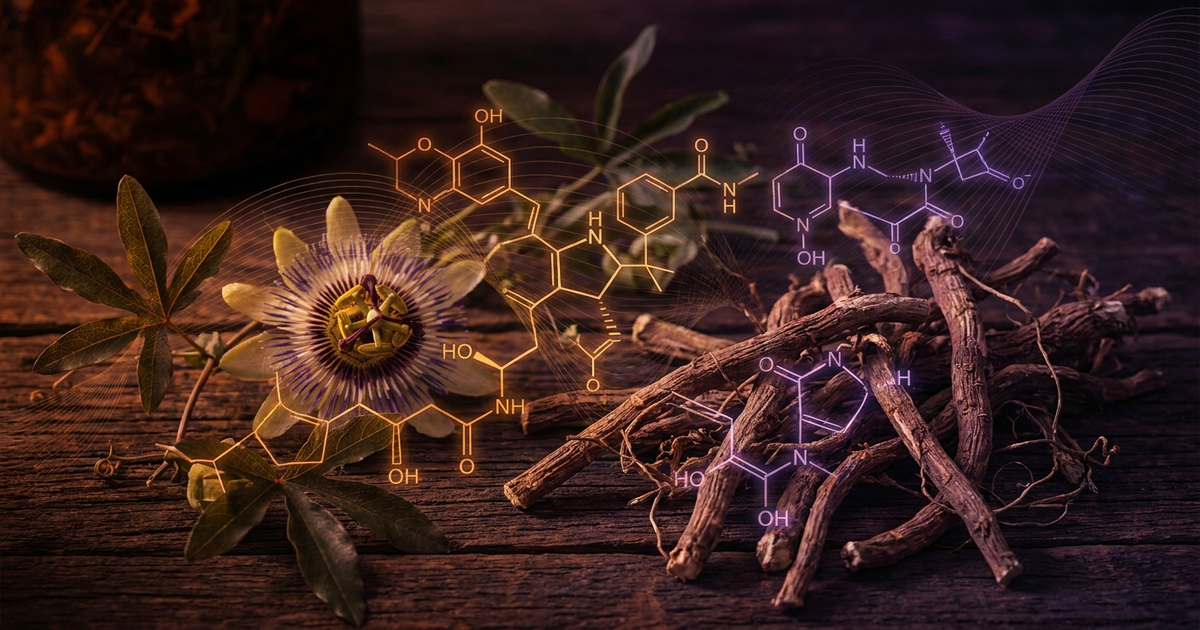
On paper, that looks complementary: valerian for the body, passionflower for the racing mind. That's the pitch behind nearly every "sleep stack" supplement blend on the market. The mechanism argument is sound. The evidence argument is weaker than the marketing suggests.
What the Research Actually Shows
Here's the honest gap. Valerian has a real body of research behind it, including a widely cited 2006 meta-analysis in the American Journal of Medicine covering 16 studies. Passionflower has smaller but credible trials — Ngan and Conduit's 2011 crossover study and Akhondzadeh's 2001 comparison against oxazepam both showed real, modest effects. Both herbs, on their own, clear a reasonable bar of "probably does something."
What's much harder to find is a randomized, placebo-controlled trial testing valerian and passionflower together against either herb alone or a placebo. Most combination research on valerian pairs it with hops or lemon balm instead — those are the pairings that show up in the clinical literature with actual trial data behind them. The valerian-passionflower combination has a longer history in European traditional herbal medicine (compound valerian tinctures listing both herbs go back over a century in apothecary formularies) than it does in modern clinical trials. Traditional use isn't worthless — it's just a different kind of evidence than a controlled study, and it's important not to blur the two.
So when a supplement label says a valerian-passionflower blend is "clinically studied," ask what was actually studied: the individual herbs, or the specific combination at that specific ratio. Usually it's the former, repackaged to imply the latter.
Valerian vs Passionflower vs the Combination
| Feature | Valerian | Passionflower | Combined |
|---|---|---|---|
| Primary effect | Physical sedation | Mental quieting | Both, in theory |
| Onset | Weeks of regular use | Days to a couple weeks | Not separately studied |
| Evidence strength | Moderate | Modest | Thin / mostly traditional |
| Taste (tea) | Strong, earthy, unpleasant | Mild, hay-like | Valerian dominates the cup |
| Next-day grogginess | Possible at higher doses | Rare | Additive risk if both dosed high |
How to Dose the Combination Safely
Because there's no established combined-dose protocol from clinical trials, the safest approach is to treat this as stacking two known quantities rather than inventing a third. Start with each herb's own studied range, not a full dose of both from night one.
| Form | Valerian | Passionflower |
|---|---|---|
| Extract / capsule | 300–600 mg | 500 mg |
| Dried herb tea | 1 tsp, steeped 10–15 min | 1–2 g, steeped 10 min |
| Timing | 30–60 min before bed | 45–60 min before bed |
A practical sequence: try passionflower alone for a week or two, since its onset is faster. Then add valerian at the low end of its range (300 mg or one cup of tea) and see how the combination feels before moving to a higher valerian dose. If you start both at the top of their ranges simultaneously, you have no way of knowing which herb is responsible for morning grogginess if it shows up — or whether the combination itself is simply too much sedation stacked at once.
Who Should Skip This Combination
Both herbs affect the same GABA pathway, which means their sedating effects are additive, not independent. That raises the stakes for a few groups:
- Anyone on benzodiazepines, prescription sleep aids, or other sedatives. Stacking two GABAergic herbs on top of a GABAergic medication is not a combination to experiment with alone.
- Regular alcohol drinkers. Alcohol is also GABAergic. Combining it with both herbs on the same night compounds the sedation in ways that haven't been studied.
- Pregnant or breastfeeding women. Neither herb has sufficient safety data for pregnancy; the combination has even less.
- Anyone with surgery scheduled. Stop both at least two weeks out — they may interact with anesthesia.
- Anyone driving or operating machinery the same night they try the combination for the first time, simply because the combined sedative effect on a new user is unpredictable.
If none of those apply and you're generally healthy, the risk profile of trying the combination cautiously is low. But "low risk" and "well-studied" are not the same claim, and this article is only making the first one.
A Gentler Alternative Worth Knowing About
If you're drawn to herb stacking generally, valerian's better-studied combination partner is actually lemon balm, not passionflower. A 2006 trial in children and a 2014 adult trial both tested the valerian-lemon balm pairing directly and found it outperformed either herb alone. That's the kind of combination-specific evidence that valerian-passionflower currently lacks. If chamomile tea is more your speed, some people rotate it with passionflower on nights they want something milder than valerian altogether.
The Verdict
Combining valerian and passionflower isn't a bad idea — the mechanisms genuinely complement each other, and both herbs individually have earned their place in a sleep routine. What it isn't is a proven protocol. Treat it as two moderately-evidenced herbs taken together, not as a third, separately-validated remedy. Start low, add one variable at a time, and don't expect the combination to outperform either herb alone just because two ingredients sound more powerful than one. Sometimes it will. The honest answer, right now, is that nobody has run the trial that proves it.
Transparency note: This article was researched and written by Chester Takau with AI assistance for research gathering and drafting. All recommendations reflect the author's own editorial judgment.
Medical disclaimer: This article is general information reflecting traditional use and published research — not medical advice. Supplement effects, doses, and interactions vary from person to person. Talk to a doctor or pharmacist before starting any supplement, especially if you are pregnant or breastfeeding, taking medication, or managing a health condition.
Comments
Post a Comment