Does Ashwagandha Make You Sleepy? What the Research Actually Says

Does Ashwagandha Make You Sleepy? What the Research Actually Says

By Chester Takau · July 2026

Short answer: mostly no, but not never. Ashwagandha isn't a sedative the way melatonin or a sleeping pill is — it works mainly by lowering cortisol and stress signaling, so sleep comes easier rather than getting switched off on contact. That's why most people describe it as "calming," not "sleep-inducing," despite what the name suggests. But drowsiness is officially listed as a common mild side effect by the NIH, and a real minority of users do feel genuinely sleepy, sometimes into the next morning. Whether that's you comes down to dose, sensitivity, and timing — here's the breakdown.
Ashwagandha root and powder beside a dimly lit bedside table, representing whether ashwagandha makes you sleepy or just calm

Group 1 — Most People

Calm, not sedated

The dominant expert framing, repeated across clinical and consumer sources, is that ashwagandha doesn't cause instant drowsiness like a sleeping pill. It lowers the evening stress load that was keeping you wired, and sleep improves as a downstream effect over roughly 6–8 weeks of consistent use — not the first night. If you take a standard dose and feel nothing more than "less anxious by bedtime," that's the herb working as intended for most users.

Group 2 — A Real Minority

Genuinely drowsy, and here's why

Sleep Foundation attributes part of ashwagandha's sleep effect to GABA-receptor activity on top of its cortisol-lowering action — a mild sedative-adjacent mechanism, not just stress relief. That's the piece most "it's not a sedative" articles leave out, and it explains why a documented subset of users do feel real drowsiness rather than calm. Higher doses, higher individual sensitivity to GABA-acting compounds, and taking it alongside other calming supplements all raise the odds you land in this group instead of Group 1.

Group 3 — Next-Day Grogginess

How to avoid the morning-after fog

Forum reports of feeling "hungover" the next morning cluster around three fixable variables: too high a dose for your body, taking it too close to your wake time, and leaf-inclusive extracts rather than root-only ones. If mornings feel foggy, drop back to a lower dose, move your dose earlier in the evening, and check the label for a root-only extract before assuming ashwagandha just isn't for you.

Does it work like melatonin?

No, and a March 2026 head-to-head trial makes the distinction clear. In an 8-week randomized study of 200 adults aged 18–50, researchers compared ashwagandha (300 mg twice daily), melatonin (3 mg), and the combination of both. All three cut sleep-onset latency, but the ashwagandha-plus-melatonin group showed the greatest improvement — suggesting the two work through different pathways rather than duplicating each other (PubMed, March 2026). Melatonin resets your circadian signal directly; ashwagandha lowers the stress chemistry standing in the way of sleep. That's also why ashwagandha's dosing window is more forgiving than a herb like valerian, where the valerian timing mistake that keeps people up is a strict before-bed-only problem — ashwagandha's cortisol-lowering action tolerates more flexible timing.

Morning or night: how to decide

If your main issue is daytime stress that follows you into bed, morning or afternoon dosing lets the cortisol-lowering effect build across the day. If you fall asleep fine but wake up wired at 3am, an evening dose 30–60 minutes before bed targets that window directly. A newly reported all-female study of the Shoden extract found benefits across stress, sleep, mood, and focus (NutraIngredients, May 2026), and a sustained-release formulation tested over 60 days improved both stress and sleep quality at 150 mg and 300 mg, with the 300 mg dose working faster (NutraIngredients, April 2026). Neither trial found a reason to insist on one fixed time — match the timing to which problem you actually have.

For a walkthrough of the clinical evidence behind the sleep claims, the video above reviews what the trials actually show before you decide whether ashwagandha is worth adding to your routine.

Is the sleepy feeling related to "emotional blunting"?

This overlap is rarely discussed directly, but it's worth separating. Some anecdotal reports describe ashwagandha causing apathy or a "flat" feeling, sometimes compared to an SSRI effect — distinct from drowsiness, though the two get conflated in forum threads. Practitioners note this isn't a doctor-acknowledged side effect and lacks clinical backing, unlike drowsiness, which the NIH does list as a recognized mild effect (NIH ODS fact sheet). If you feel sleepy and calm, that's the expected mechanism. If you feel numb or emotionally flat rather than calm, that's a different complaint worth flagging to a doctor rather than riding out.

The liver-safety question, and how long before it works

Australia's TGA reaffirmed in its 2025–2026 safety update that Withania somnifera products carry a "very rare" risk of liver injury; most cases resolved after stopping, though some needed treatment and four required hospitalization (TGA safety update). The Netherlands Pharmacovigilance Centre logged 12 liver-injury cases through June 2025. Set against that, a 2025 Frontiers in Nutrition meta-analysis of high-quality clinical-trial data found ashwagandha generally well tolerated with no adverse effect on liver, thyroid, or kidney function (Frontiers in Nutrition, 2025). The practical middle ground: expect the sleep benefit to build over weeks rather than one dose, choose root-only extracts, and if you're on it long-term nightly, that's a reasonable case for periodic liver-enzyme checks rather than either dismissing the case reports or panicking over them. Ashwagandha's gradual, cortisol-driven path to sleep is a different mechanism entirely from a direct sedative like kava, where how kava preparation changes its sedative strength is the whole story — there's no equivalent onset-speed question for a stress-modulating adaptogen.
Ashwagandha root and powder beside a dimly lit bedside table, deep purple-to-indigo gradient

Where ashwagandha fits among sleep herbs

Ashwagandha sits closer to an adaptogen than a sedative, which puts it in a different category from the GABA-direct herbs covered across herbal sleep remedies for modern insomnia. If you want something that works on contact, look at the sedative end of that lineup. If your insomnia is stress-driven and you can wait a few weeks for the effect to build, ashwagandha is one of the better-evidenced options for that specific problem.

The bottom line

For most people, ashwagandha won't make you sleepy in the way a sleeping pill does — it lowers the stress response that was keeping sleep away. For a real minority, GABA-receptor activity means genuine drowsiness, and next-day grogginess is usually a dose or timing problem rather than a reason to quit. Start low, take it consistently for several weeks before judging it, and pick a root-only extract if mornings feel foggy.

Transparency note: This article was researched and written by Chester Takau with AI assistance for research gathering and drafting. All recommendations reflect the author's own editorial judgment.

Medical disclaimer: This article is general information reflecting traditional use and published research — not medical advice. Supplement effects, doses, and interactions vary from person to person. Talk to a doctor or pharmacist before starting any supplement, especially if you are pregnant or breastfeeding, taking medication, or managing a health condition.


Holy Basil Tulsi for Sleep: What the Cortisol Research Actually Shows

Holy Basil Tulsi for Sleep: What the Cortisol Research Actually Shows

By Chester Takau · Port Vila, Vanuatu · July 2026

Short answer: Holy basil (Ocimum sanctum, also called tulsi) improves sleep indirectly, by lowering the evening cortisol load that keeps you wired — it is not a sedative and won't make you drowsy the way valerian or kava can. The best human evidence is an 8-week, double-blind trial where a standardized extract taken twice daily cut hair cortisol, blunted the stress-cortisol spike, and improved subjective sleep-quality scores. If you want tulsi's sleep benefit, plan for weeks of consistent use, not a knockout dose before bed.

Does Holy Basil Actually Help You Sleep, or Just Lower Stress During the Day?

This is the question almost every tulsi article dodges by conflating the two. Holy basil's mechanism runs through the HPA axis — the hypothalamic-pituitary-adrenal system that governs your cortisol output — not through the GABA receptors that sedative sleep herbs use. Compounds in the leaf, mainly eugenol, rosmarinic acid, and ursolic acid, appear to recalibrate cortisol signaling rather than switch your brain off. Allergy Research Group's 2025 clinical review frames tulsi explicitly as a stress-resilience and recovery adaptogen, and Cleveland Clinic's current explainer is blunt that it "shouldn't cause drowsiness." So the honest framing is: tulsi improves sleep by lowering the stress load that was disrupting it, not by knocking you out. If you're looking for something that makes you sleepy on contact, this isn't it.

Tulsi holy basil leaves and a cup of herbal tea at dusk, representing holy basil tulsi for sleep and cortisol regulation

The Study Behind the Numbers

The trial every 2025–2026 article traces back to is a randomized, double-blind, placebo-controlled study published in Frontiers in Nutrition in 2022, testing a standardized Ocimum tenuiflorum extract (branded Holixer) on stressed adults. After 8 weeks, the extract group showed significantly lower hair cortisol — a marker of chronic stress exposure over months, not just one bad day — along with a blunted salivary cortisol spike after acute stress and better subjective sleep-quality scores than placebo. Secondary reporting on the same trial, repeated widely through 2025 and 2026, puts numbers on it: participants taking 125 mg twice daily felt 37% less stressed, saw a 48% reduction in insomnia scores, and reported 53% more sound sleep over the 8 weeks. Cleveland Clinic still adds the necessary caveat that "further research is necessary to confirm the benefits of holy basil for sleep," and that's fair — this is one well-designed trial, not a mountain of them, and it tested an extract, not a cup of tea.

Morning or Night? A Simple Way to Decide

Timing advice on tulsi is genuinely contradictory, because two different camps are solving two different problems. The Ayurvedic and energizing camp takes it in the morning, to blunt the cortisol surge before it derails the whole day. The sleep-focused camp takes it 30 minutes before bed, aiming the effect directly at nighttime wind-down. A simpler way to decide: if you feel wired-and-tired all day — anxious and exhausted at once, unable to settle even when you're drained — take it in the morning, so it's doing its cortisol work before the stress builds. If your days are fine but you can't switch your mind off once you're in bed, take it 30 minutes before lights-out instead. If both apply, a split dose (morning and night) is what many people land on. This is a different timing problem than the timing mistake that undoes valerian's benefit — valerian is sedating, so its window before bed is strict, while tulsi's flexibility is exactly what you'd expect from a stress-modulator rather than a sedative.

Tea, Capsule, or Tincture: Which Form for Sleep

The form you pick changes both the dose and the honest expectation attached to it.

Holy basil by form

Form Typical dose Notes
Loose-leaf tea1–2 cups dailyCaffeine-free; weakest, most gradual dose; fine nightly
Fresh leaves2–3 leaves, chewedLinked to the acute 40-minute cortisol-drop finding below
TincturePer label, usually 1–2 mLFaster absorption than tea
Standardized extract125 mg, twice dailyMatches the 2022 clinical trial dose

Dr. Brad Stanfield's 2025 review of forms, dosing, and side effects is a useful reference if you want brand-level detail before buying an extract rather than just drinking the tea.

How Long Until It Works

Two timelines get reported and they aren't contradictory, they're measuring different things. A 2025 press report on an Australian study found a single cup of holy basil tea, or chewing about three fresh leaves, dropped cortisol roughly 36% within 40 minutes — a real acute effect, but a same-day stress dip, not a sleep transformation. The sleep-quality improvements from the clinical trial above took the full 8 weeks of twice-daily dosing to show up. Practically: don't expect night one to feel dramatic. Expect the daytime stress-blunting to register within the first week, and expect the sleep-quality change — if it comes — to build gradually across a month or two of consistent use.

Holy Basil vs Other Sleep Herbs: Where It Actually Fits

The most common comparison people search for is tulsi versus ashwagandha, and the consensus in side-by-side reviews is fairly consistent: ashwagandha is the stronger choice for evening, deep-sleep-focused use, while holy basil works better as a daytime or late-afternoon herb for the "slow down but still function" kind of stress. For a broader look at where both fit among herbal remedies for modern insomnia, it helps to separate adaptogens like tulsi from true sedatives. Kava is the clearest contrast: its kavalactones act directly on GABA receptors for a faster, more sedating effect, which is why the traditional-versus-instant kava preparation debate is really a conversation about potency and onset speed — questions that don't even apply to a cortisol-modulating herb like holy basil.

Who Should Not Take Holy Basil for Sleep

The most underserved warning in tulsi coverage is the low-cortisol caution: since the herb's whole mechanism is suppressing cortisol, taking it when your cortisol is already low — a pattern some people associate with burnout or adrenal fatigue — is a recurring concern raised in forum discussions and worth ruling out before starting. There's a clearer, better-documented risk too: 2025–2026 safety reporting flags that holy basil can lower blood sugar, so combining it with insulin or sulfonylurea medications may cause hypoglycemia — dizziness, shakiness, or fatigue. If you're on diabetes medication, already have unusually low cortisol, are pregnant, or are trying to conceive, talk to a doctor before adding tulsi rather than assuming "herbal" means "no interactions."

The Vivid Dream Side Effect Nobody Warns You About

Mainstream tulsi articles almost never mention this, but it shows up repeatedly in forum threads: some users report weird, vivid, or outright sad dreams after starting holy basil, occasionally intense enough that they woke up crying and stopped taking it. The same HealthUnlocked threads also contain the opposite experience — users describing a "70% decrease in anxiety attacks and irritability" and calmer, less fragmented sleep. Both are real reports about the same herb. If you're sensitive to dream intensity generally, it's worth knowing going in rather than being surprised by it three weeks into a bottle.

For a first-person look at how one person works daily tulsi into a wellness routine, the video above covers brewing habits and the calming effects they noticed — useful as a lived-experience counterpoint to the clinical numbers above, though it's a personal account rather than a clinical one.

The Bottom Line

Tulsi (holy basil) leaves and a cup of tea at dusk, deep green-to-gold gradient

Holy basil's sleep benefit is real in the one strong trial we have, but it's a slow, cortisol-mediated effect, not a sedative one — treat it like a weeks-long stress intervention that happens to improve sleep, not a nightly knockout herb. Match the dose and timing to your actual problem, watch for the blood-sugar interaction if you're on diabetes medication, and don't be alarmed if the first thing you notice is calmer days before you notice calmer nights.

Transparency note: This article was researched and written by Chester Takau with AI assistance for research gathering and drafting. All recommendations reflect the author's own editorial judgment.

What Is Hops (Humulus Lupulus) for Sleep? The Plain-Language Explainer

What Is Hops (Humulus Lupulus) for Sleep? The Plain-Language Explainer

By Chester Takau · July 2026

Short answer: Hops (Humulus lupulus) is the same climbing plant used to flavor beer, and its cones contain compounds — xanthohumol and humulone — that boost GABA, the brain's calming neurotransmitter. Taken as an extract, tincture, or tea, it produces a mild sedative effect. Taken as beer, it doesn't, because the alcohol works against sleep and the hops dose is too small to matter.

What is hops, exactly?

Humulus lupulus is a perennial climbing vine in the same family as cannabis (Cannabaceae). Its female flowers form small cone-shaped clusters that brewers dry and add to beer for bitterness and aroma. Those same cones are what herbalists use medicinally — not for flavor, but for the resins and oils inside them, which is where the sedative compounds live.

Hops cones on the vine at dusk, soft green-to-indigo gradient

How does hops actually make you sleepy?

Two compounds do the work: xanthohumol and humulone. Both act as positive allosteric modulators of GABAA receptors — meaning they don't replace GABA, they make your existing GABA signal land harder. A 2021 study on the Saaz–Saphir hops mixture confirmed this mechanism directly. Then in November 2024, a study on Hongcheon-hop extract (grown in Korea) went further: at 100–200 mg/kg it produced dose-dependent increases in deep, slow-wave sleep, and in an insomnia model, a low dose of the extract actually outperformed the same dose of GABA itself. That's a striking result — a plant extract beating the neurotransmitter it's supposed to be boosting — and it's the strongest single piece of evidence that hops isn't just folklore. (PubMed 39522843)

Hops cones on the vine at dusk, soft green-to-indigo gradient

So why doesn't beer put me to sleep the right way?

This is the question almost every hops article dodges. Beer contains far too little hops extract to deliver a meaningful dose — you'd need to drink an impractical volume to get anywhere near 100 mg of active compound. Worse, the alcohol actively works against sleep: it fragments sleep architecture, suppresses REM, and causes rebound wakefulness in the second half of the night. A 2021 controlled study isolated the two variables by using non-alcoholic beer, and sleep quality still improved after 29 days — which tells you the hops content was doing something, just not through the beer you'd actually want to drink for it. If you want the sedative effect, skip the pint and take hops as an extract, tincture, or tea instead.

Does hops work better alone, or combined with valerian?

Hops alone has real mechanism-level evidence, as above, but most of the human clinical trials test it paired with valerian, not solo. The fixed combination Ze 91019 is the most-studied formula: an older double-blind, placebo-controlled trial found it reduced sleep latency and wake-after-sleep-onset and increased slow-wave sleep, and a 2025 feasibility trial tracked the same combination with Fitbit sleep monitors over a 21-day treatment period. (PMC12134488) Honest framing: if you want the best-evidenced clinical result, valerian-plus-hops is where the data is strongest. If you specifically want to isolate what hops does on its own, the Hongcheon-hop and Saaz–Saphir studies above are your evidence, and they hold up.

How do I actually take it, and when does it kick in?

Onset is typically 30–60 minutes, so timing it before bed matters more than the exact form.

Hops by form

Form Typical dose Notes
Dried herb tea0.5–1g dried cones, steeped 10 minMild, bitter taste; weakest dose form
Tincture1–2 mL (per label)Faster absorption than tea
Standardized extract125–250 mgClosest to clinical trial doses
Combination capsule (with valerian)Per product labelBest-evidenced clinical form (Ze 91019)

Does a hops pillow actually do anything?

Filling a pillow with dried hops is old European folk practice, and it's plausible in principle — hops release volatile oils as they warm, so there's a scent-exposure mechanism similar to lavender aromatherapy. But there's no clinical trial testing a hops pillow specifically, so this stays in folklore territory rather than evidence territory. It's low-risk to try, just don't expect it to match an oral extract dosed at trial-level amounts.

Will I get next-day grogginess, or build a tolerance?

At the doses used in the trials above, next-day grogginess is uncommon — hops is described consistently as mild rather than knockout-strong, which is part of why some users feel it's too weak alone. There's no strong evidence of tolerance or dependence building with typical intermittent or nightly use, unlike benzodiazepine sleep medications. If you notice morning fog, that's a signal to lower the dose rather than push through it.

Who should be careful with hops?

Hops contains 8-prenylnaringenin, one of the most potent phytoestrogens found in a plant. That's relevant if you're managing a hormone-sensitive condition, pregnant, breastfeeding, or on hormonal medication — talk to a doctor before regular use. Hops can also add to sedation from alcohol, sedative medications, or antidepressants, so don't stack it with those without medical guidance. It's generally regarded as safe at typical herbal doses for otherwise healthy adults, but "safe" and "no interactions" aren't the same claim.

For a broader look at hops as a traditional insomnia remedy, the video above covers the plant's history as a sedative outside of its brewing use.

Hops is frequently paired with valerian root, the herb it's most often combined with in clinical trials, and it shares the same GABA-pathway logic as lemon balm, though lemon balm works upstream on the enzyme that breaks GABA down rather than on the receptor itself. If you're comparing scent-based calming options, lavender essential oil is the closest analog to the hops-pillow folklore, with more aromatherapy trial data behind it.

Transparency note: This article was researched and written by Chester Takau with AI assistance for research gathering and drafting. All recommendations reflect the author's own editorial judgment.

Lavender Essential Oil for Sleep: Does It Actually Work?

Lavender Essential Oil for Sleep: Does It Actually Work?

By Chester Takau · Port Vila, Vanuatu · July 2026

Yes, with a caveat worth stating upfront: lavender essential oil has real evidence behind it for sleep, and a chunk of what it does is ritual and expectation rather than pure pharmacology — which is fine, because both parts still help you sleep better. A 2026 meta-analysis pooling 11 randomized trials and 628 adults found a statistically significant improvement in sleep quality from lavender inhalation. It works through your nose, not your bloodstream: smelling linalool activates GABA-calming neurons in the brain's amygdala, and blocking either the smell pathway or those neurons cancels the effect. This article covers what the evidence actually supports, how to dose it by method, and the safety questions — cats, pregnancy, kids — that most lavender content skips.

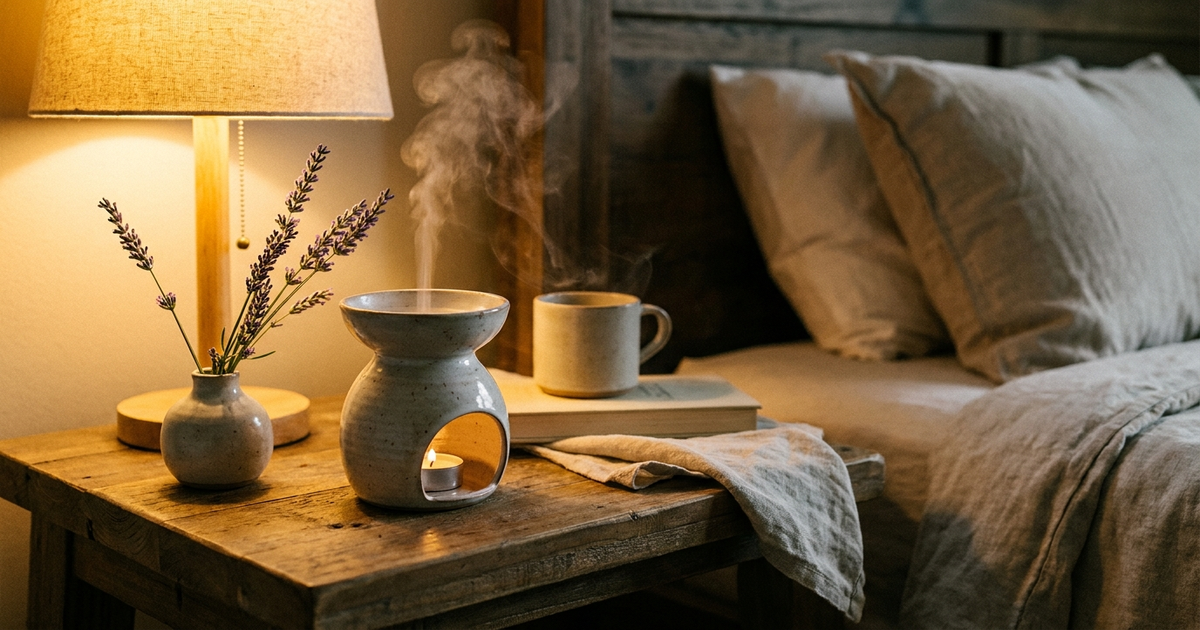
A ceramic diffuser releasing soft mist beside a lavender sprig on a nightstand, dim warm bedroom light

The verdict

Worth trying as a low-risk sleep aid, best used as an inhaled diffuser or pillow spray 30–60 minutes before bed, for at least two weeks before judging whether it's working. Not a fix for chronic insomnia on its own, not safe to diffuse freely in a home with cats, and the internal-use trend some videos push isn't the well-evidenced form — that's the standardized oral capsule (Silexan), not raw oil under the tongue.

What the recent research actually shows

The evidence has gotten stronger in the last two years, not weaker. Beyond the 2026 meta-analysis above, a systematic review from October 2025 found lavender significantly improved sleep disorders in 9 of 10 trials in older adults specifically. Smaller trials have found benefits in less obvious populations too: chronic heart-failure patients slept better at every measured time point over four weeks of nightly inhalation with no adverse events, and a January 2025 trial in chemotherapy patients found lavender aromatherapy reduced fatigue and improved sleep-quality scores. None of these are cure-all results — they're modest, consistent improvements across sleep-quality scales, which is a realistic outcome for a mild GABA-pathway relaxant rather than a sedative.

How it actually works: smell, not sedation

A 2024 mechanism study in the Journal of Ethnopharmacology settled a question that's been open for years: lavender's sleep effect depends entirely on smell. Researchers blocked the olfactory pathway in test subjects, and the sleep benefit disappeared. They also silenced specific GABA-producing neurons in the central amygdala, and the effect disappeared again. In plain terms, lavender doesn't sedate you chemically the way a sleeping pill does — the scent itself triggers a calming neural response, which is why inhaled forms (diffuser, pillow spray) have the strongest evidence, and why swallowing raw oil skips the actual mechanism that's been shown to work.

Diffuser vs. pillow spray vs. topical vs. capsule: which method wins

Almost no guide puts these side by side with real dosing. Here's the comparison:

Method How to use Evidence fit Best for
Ultrasonic diffuser 3–5 drops per 100ml water, run 30–60 min before bed Closest match to how most trials deliver it (inhalation) A consistent bedtime ritual
Pillow / linen spray 2–3 drops diluted in water in a small spray bottle, light mist Same inhalation mechanism, less precise dosing Travel, no diffuser on hand
Topical (diluted) 2–3 drops in a carrier oil, rubbed on wrists or temples Adds skin contact to inhalation; never apply undiluted A calming wind-down habit
Oral capsule (Silexan) 80mg standardized capsule, by mouth, per label Strongest trial evidence for anxiety-linked sleep issues — a regulated product, not raw oil People who want a medical-grade option; check with a doctor first

Skip swallowing raw essential oil entirely. It's not the form the evidence supports, and undiluted oil can irritate your mouth and gut. If oral use appeals to you, that's what Silexan capsules exist for.

True lavender vs. lavandin: does the species matter?

It does, and almost nobody explains it. Lavandula angustifolia ("true" or English lavender) is the species used in most of the sleep trials, and it has a higher linalool content with a softer, sweeter scent. Lavandin (Lavandula x intermedia) is a hybrid that's cheaper and more common in budget products — it has more camphor, which gives it a sharper, more medicinal smell, and it's the form more likely to trigger headaches with overuse. Check the Latin name on the label. If it just says "lavender oil" with no species listed, assume it's the cheaper lavandin blend.

How long before it actually works?

Don't expect a single night to prove much either way. The trials with the clearest results used consistent nightly use over two to four weeks, not one-off sessions — the heart-failure trial mentioned above measured improvement building over four weeks. If you're testing lavender for yourself, commit to at least two weeks of the same method and timing before deciding it does or doesn't work for you. A single good or bad night tells you more about your day than about the oil.

For a more measured look at what the evidence supports versus the hype around lavender, the video above walks through the centuries-old sleep connection and where the science actually lands today.

Is it safe around cats and dogs?

Not for cats, and this is the safety issue most lavender-for-sleep content leaves out entirely. Cats lack the liver enzymes needed to metabolize linalool and linalyl acetate, the compounds that make lavender smell the way it does, so both diffused and topical lavender are considered toxic to them — vet-reviewed guidance is consistent on this point. If you share a bedroom with a cat, don't run a diffuser there; use a closed door, a different room, or switch to a pillow spray applied well before the cat is anywhere near it, with the window cracked. Dogs tolerate lavender scent better than cats, but diffusing in a small, poorly ventilated room isn't ideal for any pet.

Is it safe during pregnancy, breastfeeding, or for kids?

Inhaled lavender (diffuser, pillow spray) is generally considered low-risk during pregnancy and breastfeeding in the amounts used for sleep, but skip internal use entirely, and check with your doctor or midwife before starting anything new in pregnancy regardless of how "natural" it seems. For children, the same inhalation-only rule applies more strictly — avoid topical or oral use in young kids without pediatric guidance, and keep diffusers out of infant bedrooms, since babies' airways and skin are more sensitive to concentrated scent than an adult's.

The placebo question, honestly

A critical review in Phytotherapy Research makes a fair point: most lavender-and-sleep trials are unblinded, because you can't hide a strong scent from a participant, which leaves room for expectation to inflate the results. That doesn't mean lavender does nothing — the amygdala mechanism study above shows a real neural pathway being activated, not just a story people tell themselves. But some of the benefit is almost certainly the ritual itself: a fixed pre-bed routine, a pleasant smell, a signal to your brain that the day is over. That's not a flaw. Pairing lavender with the same routine you'd use for any calming bedtime herb is a reasonable way to use both the pharmacology and the ritual instead of treating them as competing explanations.

How lavender compares to other options

If lavender's scent-only mechanism doesn't suit you, valerian root works through actual GABA-receptor activity rather than smell, and comes as a tea or capsule rather than requiring a diffuser. Lemon balm shares a similar mild aromatic-calming profile to lavender but is taken as tea rather than inhaled. Passionflower targets anxiety-driven sleeplessness more directly. None of these are mutually exclusive — the mechanism behind why lavender's evidence depends on smell rather than ingestion connects to the broader question of how your sleep architecture responds to calming inputs before lights-out, not just during the night itself.

The bottom line

Lavender essential oil has legitimate, mechanism-backed evidence for improving sleep quality when inhaled consistently — diffuser or pillow spray, 30–60 minutes before bed, for at least two weeks. It's not a sedative and won't fix chronic insomnia by itself, some of its benefit is ritual rather than pure pharmacology, and that's an honest reason to like it rather than a reason to dismiss it. Choose true lavender (Lavandula angustifolia) over unlabeled blends, keep it away from cats, and skip the internal-use trend — if oral lavender interests you, a standardized Silexan capsule is the evidence-backed version, not a drop under the tongue.

Transparency note: This article was researched and written by Chester Takau with AI assistance for research gathering and drafting. All recommendations reflect the author's own editorial judgment.

Related on NaturalSleepHerbs: Mind-Body Sleep Techniques That Actually Work

Is Chamomile Safe for Children? Age, Dosage, and Allergy Answers Parents Need

Is Chamomile Safe for Children? Age, Dosage, and Allergy Answers Parents Need

By Chester Takau · Port Vila, Vanuatu · July 2026

Chamomile flowers and a small child's teacup on a soft-lit table, warm amber and cream tones, no faces visible

Chamomile is generally considered safe for children once they're past 12 months old, given in small amounts and prepared as a weak tea rather than a concentrated extract. The main risks aren't dramatic — they're allergic reaction in kids sensitive to ragweed-family plants, and, for infants under 12 months, a small but real botulism risk tied to loose dried herbs rather than commercial tea bags. What most articles skip is that the National Center for Complementary and Integrative Health (NCCIH) rates chamomile only "possibly safe" for children and says the evidence for it actually helping with sleep, colic, or diarrhea in kids "has not produced sufficient reliable evidence to rate clinical usefulness." Safe and effective are two different questions, and chamomile's safety record is stronger than its evidence for working.

Chamomile flowers and a small child's teacup on a soft-lit table, warm amber and cream tones, no faces visible

Is chamomile tea safe for a baby under 12 months?

Most pediatric guidance says wait until after the first birthday. Two separate concerns drive that cutoff. First, infant botulism: dried loose chamomile has occasionally carried Clostridium botulinum spores, which an infant's immature gut can't yet neutralize the way an older child's or adult's can — commercial tea bags are processed differently and carry far less of this risk than loose dried flowers bought in bulk. Second, babies under 12 months have immature kidneys and livers that process compounds less efficiently, which is the same reasoning behind delaying honey and other whole foods. Some European sources and a handful of practitioners allow a few teaspoons from around 6 months for digestive fussiness, but that's the minority position — most US and UK pediatric sources hold the line at 12 months.

How much chamomile tea can I give a toddler?

For toddlers over 12 months, a weak brew in small quantities is the standard advice: roughly 1–2 ounces (30–60ml) of well-diluted tea, offered occasionally rather than daily, using half the steeping time and half the amount of dried flower or tea bag you'd use for an adult cup. Serve it lukewarm, not hot, and always taste-test it yourself first. There's no established clinical dosing for children the way there is for some adult herbal doses — pediatric chamomile dosing is extrapolated from tradition and caution, not from trials measuring exact safe upper limits in toddlers.

If you want a walkthrough of how parents actually approach this at bedtime, the video above from Your Nutrition Network covers the sleep-specific angle in more detail than most written guides.

Can chamomile really help a colicky or fussy baby?

The honest answer is: maybe a little, but it's not proven. Chamomile has a long folk history as a colic remedy, and plenty of parents report it settles a fussy baby. NCCIH's own position is more measured — it states chamomile alone hasn't been shown in reliable trials to help with colic or diarrhea in infants. Combination herbal teas (chamomile mixed with fennel, licorice, and other herbs) have somewhat better trial support for colic than chamomile by itself, but combination products bring their own dosing and allergy complications in a baby under 12 months. If it's being used at all in this age group, it should be with a pediatrician's sign-off, not as a first-line home remedy.

My child is allergic to ragweed — is chamomile off-limits?

Treat it as a real risk, not a footnote. Chamomile belongs to the Asteraceae family, along with ragweed, daisies, and chrysanthemums, and cross-reactivity is well documented — a classic case report in the Journal of Allergy and Clinical Immunology described anaphylaxis in a patient with known ragweed sensitivity after chamomile tea, and allergy-education resources updated for 2026 still flag this as a live concern. If your child has diagnosed ragweed, daisy, or chrysanthemum allergies, or a strong seasonal pollen allergy, skip chamomile entirely or get an allergist's clearance first. If there's no known Asteraceae sensitivity but you're unsure, a cautious first exposure (see below) is the safer path than assuming it's fine.

What does a safe first exposure actually look like?

Give a very small amount — a teaspoon or two of weak, cooled tea — earlier in the day rather than right before bed, then wait. Watch for hives, lip or facial swelling, wheezing, vomiting, or unusual fussiness over the following few hours. If nothing happens, you can offer a normal small serving another day. If anything looks like a reaction, stop and call your pediatrician; severe reactions (difficulty breathing, swelling of the face or throat) need emergency care, not a wait-and-see approach. This kind of staged first exposure is standard practice for introducing any new food or herb to a young child, and chamomile is no exception just because it's marketed as gentle.

Loose-leaf vs. tea bags — is the botulism risk real?

It's real but specific to infants and to loose, dried, minimally processed chamomile — not to commercial tea bags brewed for older children or adults. Infant botulism cases linked to herbal products are rare, but they're the reason honey and some loose dried herbs carry age warnings for children under 12 months. For a toddler or older child, this isn't a meaningful concern with sealed commercial tea bags. For a baby under a year, it's one more reason that age cutoff exists at all, alongside the kidney and liver immaturity issue.

Will chamomile tea help my toddler sleep, and is it habit-forming?

It may help a little through the same mild GABA-related pathway that gives chamomile tea its modest calming effect in adults, plus the ritual of a warm drink and a wind-down routine before bed. It's not habit-forming in the addictive sense — chamomile doesn't produce dependence or withdrawal. But don't expect it to fix a real toddler sleep problem on its own. If bedtime resistance or frequent waking is the actual issue, a consistent routine does more heavy lifting than any herb, and chamomile works better as a small supporting habit than a solution by itself.

Is chamomile safe alongside my child's medications?

Check with a pharmacist or pediatrician if your child takes anything sedating (cold medicines with antihistamines, prescribed sleep aids) or any drug affecting blood clotting, since chamomile contains mild coumarin compounds. This interaction risk is the same one flagged for adults on valerian root and other GABA-acting herbs — kids on regular medication just have a smaller margin for error, so it's worth a quick check rather than assuming a "natural" tea can't interact with anything.

Are chamomile gummies and calming products for kids safe, or just tea?

Treat each product type separately — they don't share a risk profile. Tea, properly diluted, is the best-understood form for children. Gummies and other manufactured "calming" products often contain concentrated extract plus other ingredients (melatonin, other herbs, sugar alcohols), and dosing on the label doesn't always map cleanly to the tea-based guidance above, so check the actual chamomile content and any co-ingredients before assuming it's equivalent to a cup of tea. Essential oils are a different category again — they're for diffusing or heavily diluted topical use, never for a child to ingest. And a 2025 safety review specifically flagged chamomile poultices (used topically, often for skin or eye irritation) for allergic reaction and contamination risk, which is barely mentioned in most parenting content that treats "chamomile" as one single, uniformly gentle thing.

Does the pediatrician actually need to approve it first?

For a healthy child over 12 months with no known Asteraceae allergy and no relevant medications, an occasional small cup of weak chamomile tea doesn't require a doctor's sign-off — it's a low-risk home choice. Get clearance first if your child is under 12 months, has any allergy history involving ragweed or related plants, takes sedating or blood-thinning medication, or has an underlying health condition. Two active pediatric trials — one on chamomile and valerian for dental anxiety (NCT07515612, running through mid-2026) and one on chamomile gummies for pediatric dental anxiety completed in late 2025 — are still generating the evidence base here, which is itself a sign that pediatric-specific chamomile research is thinner than the tea's popularity suggests.

The bottom line

Chamomile is one of the gentler herbs to introduce to a child, but "gentle" isn't the same as "risk-free" or "proven." Wait until 12 months, start with a small diluted serving and watch for allergic reaction if there's any ragweed-family history in the family, choose commercial tea bags over loose dried flowers for infants and toddlers, and don't expect it to outperform a consistent bedtime routine. NCCIH's own read on the evidence — possibly safe, not proven effective — is the more honest framing than the confident colic-cure claims that circulate in parenting content.

Transparency note: This article was researched and written by Chester Takau with AI assistance for research gathering and drafting. All recommendations reflect the author's own editorial judgment.

Medical disclaimer: This article is general information reflecting traditional use and published research — not medical advice. Supplement effects, doses, and interactions vary from person to person. Talk to a doctor or pharmacist before starting any supplement, especially if you are pregnant or breastfeeding, taking medication, or managing a health condition.

What Are Sleep Cycles Explained: The 90-Minute Loop Your Brain Repeats All Night

What Are Sleep Cycles Explained: The 90-Minute Loop Your Brain Repeats All Night

By Chester Takau · Port Vila, Vanuatu · July 2026

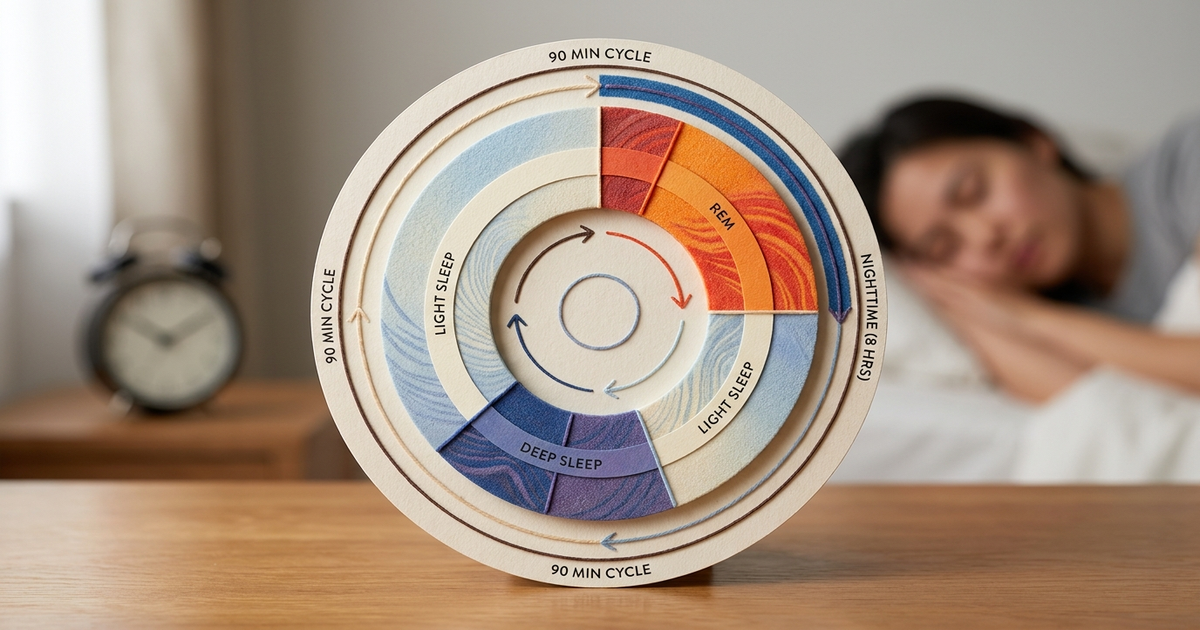
Circular diagram of the 90-minute sleep cycle showing light sleep, deep sleep, and REM stages repeating through the night

Asleep cycle is a roughly 90-minute loop your brain runs through several times a night — starting in light sleep, dropping into deep slow-wave sleep, then surfacing into REM before starting over. Most adults complete four to six of these loops between falling asleep and waking up, and how you feel in the morning depends more on where you are inside that loop when the alarm goes off than on the raw number of hours logged. I didn't understand any of this until I started flying from Vanuatu to North and South America, crossing eight or nine time zones in one trip, and spent the first several days on the ground feeling like a stranger inside my own schedule.

Circular diagram of the 90-minute sleep cycle showing light sleep, deep sleep, and REM stages repeating through the night

I. What's actually happening inside one cycle

Each cycle moves through four stages. N1 is the drowsy, drifting-off stage that lasts a few minutes. N2 is a lighter but still genuine sleep stage, and it makes up the largest share of a typical night. N3 is deep, slow-wave sleep — the hardest stage to wake someone from, and the one most tied to physical repair. Then comes REM, where your eyes move rapidly under closed lids, your brain activity picks up to something close to waking levels, and most vivid dreaming happens. A full lap through all four stages takes about 90 minutes, though real cycle length varies person to person, roughly 60 to 110 minutes, and even shifts across a single night.

The mix isn't even across the night. Early cycles are loaded with deep, slow-wave sleep and carry very little REM. By the later cycles, closer to morning, that ratio flips — deep sleep shrinks and REM stretches out, sometimes to 20 minutes or more per cycle. That's why waking up naturally at 5am often comes with a vivid dream you can still describe, while a midnight alarm rarely does: you're pulling different stages out of the night depending on when you cut it off.

If you want the stage-by-stage mechanics laid out visually, the four-minute breakdown above walks through N1 through REM in the order they actually occur, which is easier to follow than reading it in prose.


II. Is the 90-minute number real, or a myth?

Both, depending on how it's used. The Sleep Health Foundation has been blunt about this, calling the popular "sleep calculator" tools built around a fixed 90-minute cycle "unscientific hype" — their argument is that these tools take two true facts (cycles average around 90 minutes, and waking up from lighter sleep feels better than waking from deep sleep) and over-generalize them into a rigid formula. Real cycle length varies by roughly 60 to 110 minutes depending on the person and the night, sleep-onset time is never perfectly predictable, and normal nighttime awakenings throw off any clean 90-minute math almost immediately.

Even the critics don't throw out the underlying idea, though. Where your alarm fires relative to a stage boundary genuinely does affect how groggy you feel — getting woken mid-deep-sleep produces a heavier, foggier grogginess than waking near the edge of a cycle, in light sleep or REM. So the honest version is: use cycle timing as a loose rule of thumb, not a countdown you can plan a wake-up time around to the minute.


III. What eight time zones taught me about my own cycles

Before any of this, my working theory of sleep was simple: get at least eight hours and you're fine. That held up reasonably well living on a stable schedule in Vanuatu. It fell apart the first time I flew to the Americas. Crossing eight or nine hours of time difference doesn't just shift when you sleep — it puts your entire cycle architecture out of sync with your circadian rhythm, the internal clock that tells your body when to push you toward deep sleep and when to ease you toward REM and waking. Land in a new time zone and your body is still trying to run its old cycle pattern against a clock that no longer matches daylight, meals, or anyone else's schedule around you.

For me that adjustment consistently takes three to five days. The first night or two, I'd fall asleep at the wrong hour and wake up in the middle of what should have been a deep-sleep stretch, groggy in a way that had nothing to do with how many hours I'd logged. By day four or five, cycles would start landing where they should — and then, more often than not, it would be time to fly home and start the whole readjustment in reverse. Shift work does something similar: pushing sleep to irregular hours doesn't just shorten the night, it forces cycles to run against a circadian rhythm that hasn't caught up, which is part of why shift workers so often describe feeling tired even after a full night's sleep on paper.


IV. Why deep sleep does more than you'd think

A June 2026 study out of UC Berkeley, published in Cell, mapped the brain circuit behind this in more detail than we've had before. During deep, slow-wave sleep, a "braking" hormone called somatostatin drops while growth-hormone-releasing hormone rises, triggering the growth-hormone surge that rebuilds muscle, helps regulate fat metabolism, and supports recovery. The same research found a built-in feedback loop: as growth hormone accumulates overnight, it starts nudging the brain toward waking, and too much of it makes the brain sleepy again — tying the hormone surge directly to sleep-stage architecture rather than treating deep sleep as just "the rest stage."

This is also where the deep-sleep-versus-REM debate gets a little pointless. Fitness and recovery circles tend to champion deep sleep for physical repair; memory and cognition circles champion REM. Newer research doesn't really settle that argument — it suggests both stages matter for different systems, and cutting either one short has a cost.


V. What happens when cycles get cut short for years, not just one night

A March 2025 study in the Journal of Clinical Sleep Medicine followed 270 participants from the ARIC cohort, imaging their brains 13 to 17 years after their sleep had first been measured. Lower proportions of slow-wave and REM sleep back then were associated with more atrophy in the inferior parietal region of the brain — an area affected early in Alzheimer's disease. Coverage of the study framed this carefully: reduced deep and REM sleep looks like a potential modifiable early risk marker, not proof that a few rough nights cause cognitive decline. One bad night of fragmented cycles isn't a health event. A years-long pattern of consistently shortened deep and REM sleep is the thing worth paying attention to.


VI. Can you trust your smartwatch's "deep sleep" number?

Treat it as an estimate. Consumer trackers infer sleep stage from movement and heart rate patterns, not from the brainwave activity that actual sleep labs measure with EEG. That's enough to catch broad trends — a ring or watch that shows your deep sleep quietly shrinking over a month is telling you something real — but the exact minutes reported on any single night, and especially the differences between two different devices worn the same night, shouldn't be taken as lab-grade fact. Track the direction, not the digit.


VII. What actually breaks a cycle mid-loop

Alcohol is the most common one — it can help you fall asleep faster but suppresses REM in the first half of the night and fragments cycles in the second half, which is why a "sleep aid" nightcap so often produces a groggier morning than skipping it. Late caffeine delays sleep onset, which pushes your entire cycle sequence later without you necessarily realizing it. Screen light close to bedtime does something similar by delaying the circadian signal that should be easing you into the first cycle. And simply waking mid-cycle — from a noise, a phone, a kid, an alarm set at the wrong moment — tends to produce more grogginess than the same total sleep loss spread across a full, uninterrupted cycle would.

Herbs won't fix a circadian mismatch from crossing time zones or working night shifts — nothing short of time and light exposure really does that. What they can help with is protecting the front half of the process: falling asleep and staying asleep long enough for cycles to run their full course instead of getting cut off early. Valerian root and lemon balm both work on the GABA pathway to ease sleep onset and reduce nighttime waking, which matters because every early wake-up is a truncated cycle. Passionflower targets the racing-mind version of insomnia that delays the first cycle from starting at all, and chamomile tea is a gentler option for the same problem. None of them reshape your circadian rhythm the way daylight and a consistent schedule do — but a full, unbroken night gives your cycles the best chance to run the way they're supposed to, deep sleep early and REM sleep loaded toward morning.


The bottom line

Sleep cycles are the 90-minute-ish loops of light sleep, deep sleep, and REM your brain runs four to six times a night, front-loaded with deep sleep and back-loaded with REM. The 90-minute figure is a real average, not a formula you should plan your wake-up time around to the minute. What consistently disrupts the pattern — crossing time zones, working irregular shifts, alcohol, late caffeine, or simply being woken mid-stage — matters more than chasing a specific number on a tracker. Protect the length and continuity of the night, and the cycle itself tends to take care of the rest.

Transparency note: This article was researched and written by Chester Takau with AI assistance for research gathering and drafting. All recommendations reflect the author's own editorial judgment.

What Is REM Sleep and Why It Matters

What Is REM Sleep and Why It Matters

By Chester Takau · Port Vila, Vanuatu · July 2026

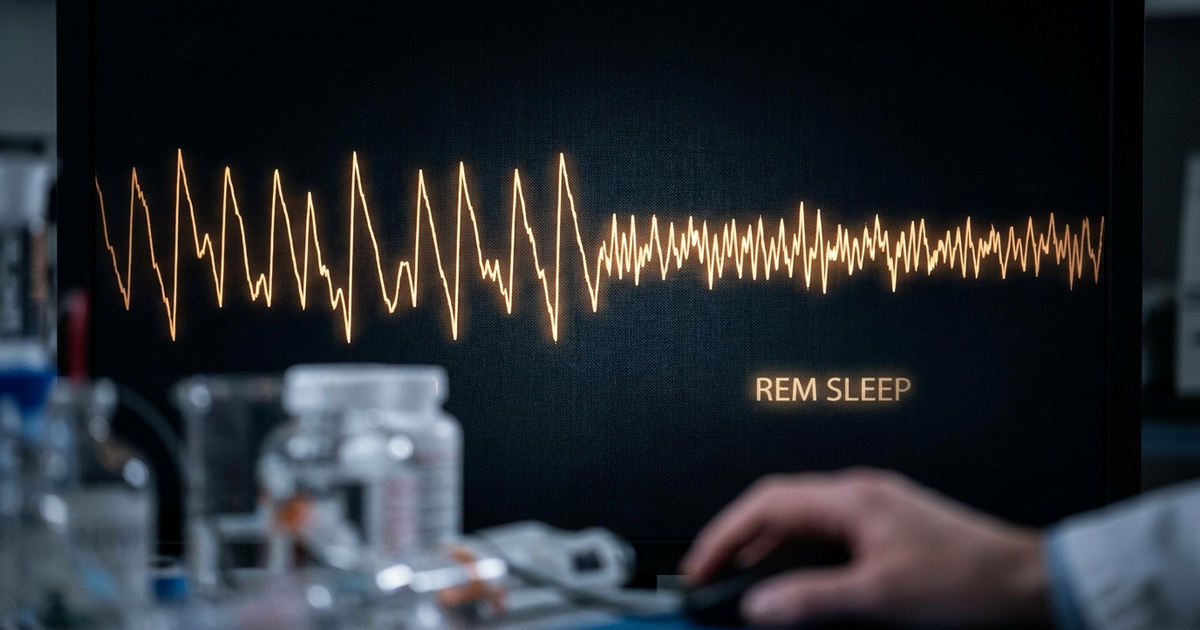
Brain wave pattern transitioning into rapid eye movement sleep, dark background with amber sawtooth wave lines
Short answer: REM (rapid eye movement) sleep is the stage where your eyes dart back and forth under closed lids, your brain activity looks almost as active as when you're awake, and your major muscles go temporarily paralyzed. It usually shows up 90 minutes after you fall asleep and makes up roughly 20-25% of a healthy adult's night. It matters because this is when your brain consolidates memory, processes emotion, and — according to newer research — restructures what you know into more useful, associative form. Cut your sleep short and REM is disproportionately what you lose, since most of it is packed into the second half of the night.

What Actually Happens During REM Sleep

REM sleep gets its name from the literal eye movement, but the more important changes are happening inside the skull. Your brain's EEG pattern during REM looks similar to light wakefulness — fast, low-amplitude waves rather than the slow, deep waves of non-REM sleep. Meanwhile your body enters near-total muscle atonia: the brainstem actively suppresses signals to your limbs so you can't physically act out what you're dreaming. Most vivid dreaming happens here, though it's a myth that dreaming is exclusive to REM — it can occur in lighter non-REM stages too, just less often and less vividly. A full night cycles through REM roughly every 90 minutes, with each REM window getting longer as the night goes on.

Brain wave pattern transitioning into rapid eye movement sleep, dark background with amber sawtooth wave lines

Why REM Sleep Matters

Two jobs stand out. First, memory: a 2025 theory published in SLEEP Advances proposes that REM doesn't just store new memories, it links them to what you already know, while slow-wave (deep) sleep preserves the fine-grained original detail. Second, emotional processing. Neuroscientist Matthew Walker has described REM as a kind of overnight therapy session — stripping the sharp emotional edge off a memory while keeping the memory itself intact. As Walker puts it in a FoundMyFitness conversation on REM and cardiovascular health:

"It's not time that heals all wounds, but it's time during REM sleep that provides emotional convalescence."

Newer network-science work adds a third angle: REM appears to be "hyperassociative," loosely reshuffling memories in ways that support creative problem-solving — part of why a hard problem sometimes looks different after a night's sleep than it did the evening before.

How Much REM Do You Actually Need

For most healthy adults, 20-25% of total sleep time in REM is typical — roughly 90 minutes to two hours across a full night. REM declines with age; older adults commonly see less of it, which is one reason sleep feels lighter and more fragmented later in life. Unusually high REM is rarely something to chase — sleep researchers note it's more often a rebound effect after a period of sleep deprivation or disruption than a sign of exceptionally good sleep. The percentage matters less than consistency: getting a similar amount most nights beats one unusually REM-heavy night after a bad week.

What Your Sleep Tracker's REM Number Actually Means

If your Fitbit, Oura, or Apple Watch reports a REM percentage, treat it as an estimate, not a lab result. Consumer wearables infer sleep stage from movement and heart rate variability rather than the EEG a real sleep lab uses, and different devices frequently disagree with each other on the same night. That doesn't make the data useless — a consistent downward trend over weeks is worth noticing — but a single night's REM number bouncing around isn't something to lose sleep over, ironically. Track the trend, not the digit.

When Low REM Is a Warning Sign

Research through 2025 and 2026 has sharpened the clinical picture. A UCSF study published in January 2025 found that people who took longer to enter REM sleep had higher levels of amyloid and tau — the proteins associated with Alzheimer's disease — suggesting delayed REM onset could be an early warning marker. Separately, UC Irvine researchers reported in May 2025 that low oxygen during REM-stage sleep apnea appears to injure small blood vessels in memory-related brain regions, even in older adults with no cognitive impairment yet. On the treatment side, a July 2026 UT Austin trial tested a noninvasive ultrasound patch that helped 28 participants reach REM roughly 43 minutes faster and stay in it about 16 minutes longer; larger trials targeting PTSD, depression, and chronic insomnia are being planned. None of this means a rough night of REM is dangerous — but a persistent pattern of reduced or delayed REM, especially alongside loud snoring or gasping, is worth raising with a doctor.

How to Protect Your REM Sleep Naturally

The single biggest lever is sleep duration itself: REM is loaded toward the second half of the night, so cutting sleep short by even an hour disproportionately steals REM rather than deep sleep. Alcohol, cannabis, and several antidepressant classes (particularly SSRIs) are well-documented REM suppressants — which is part of why people on those substances often report vivid "rebound" dreaming when they stop. On the herbal side, most sleep herbs act on total sleep quality and onset rather than REM specifically, and none should be framed as a REM-boosting supplement — that claim isn't supported by the evidence. Valerian root and lemon balm both work on the GABA pathway to help you fall asleep and stay asleep longer, which indirectly protects REM by giving your brain the full night it needs to reach those later, REM-heavy cycles. Passionflower targets the racing-mind kind of insomnia that shortens total sleep time, and chamomile tea is a gentler option for the same goal. The honest framing: protect total sleep time and REM tends to take care of itself.

The Bottom Line

REM sleep is the stage where your brain consolidates memory, processes emotion, and reshuffles what you know into more useful form — and it's concentrated in the back half of the night, which is exactly the part most people cut when they stay up late or wake early. You don't need to chase a specific REM percentage on a wearable. You need consistent, uninterrupted sleep length, since that's what actually determines how much REM you get.

Transparency note: This article was researched and written by Chester Takau with AI assistance for research gathering and drafting. All recommendations reflect the author's own editorial judgment.