Valerian and Passionflower Combination: Does Stacking These Two Sleep Herbs Actually Help?

Valerian and Passionflower Combination: Does Stacking These Two Sleep Herbs Actually Help?

By Chester Takau · Port Vila, Vanuatu · July 2026

Short answer: A valerian and passionflower combination makes mechanistic sense — both herbs act on GABA, the brain's main calming pathway, but through slightly different routes. The problem is evidence, not logic. Individually, both herbs have real (if modest) clinical support. Combined, direct trial data is thin. Most of what gets sold as "proof" of the stack is traditional-use history and product marketing, not head-to-head research. It's a reasonable thing to try, but go in knowing the combination itself hasn't been tested nearly as much as either herb alone.

Why People Stack Valerian and Passionflower

Both herbs converge on the same neurotransmitter system, which is exactly why the combination gets recommended so often. Valerian root contains valerenic acid, which appears to inhibit the enzyme that breaks down GABA and may also act directly on GABA-A receptors — a dual mechanism that produces a genuine, if gentle, sedating effect. Passionflower works through flavonoids like chrysin and apigenin, which increase GABA activity through a different route and lean more toward reducing anxious mental chatter than producing physical drowsiness.
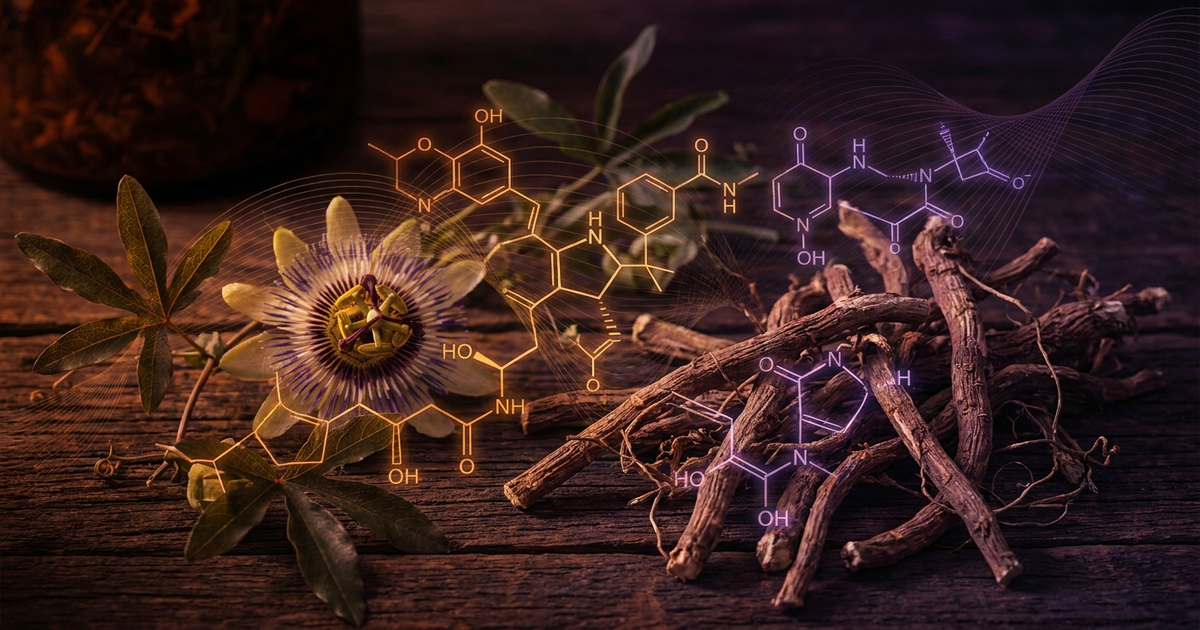
Valerian root and passionflower vine side by side with overlapping GABA pathway diagram, dark background, amber and purple tones

On paper, that looks complementary: valerian for the body, passionflower for the racing mind. That's the pitch behind nearly every "sleep stack" supplement blend on the market. The mechanism argument is sound. The evidence argument is weaker than the marketing suggests.

What the Research Actually Shows

Here's the honest gap. Valerian has a real body of research behind it, including a widely cited 2006 meta-analysis in the American Journal of Medicine covering 16 studies. Passionflower has smaller but credible trials — Ngan and Conduit's 2011 crossover study and Akhondzadeh's 2001 comparison against oxazepam both showed real, modest effects. Both herbs, on their own, clear a reasonable bar of "probably does something."

What's much harder to find is a randomized, placebo-controlled trial testing valerian and passionflower together against either herb alone or a placebo. Most combination research on valerian pairs it with hops or lemon balm instead — those are the pairings that show up in the clinical literature with actual trial data behind them. The valerian-passionflower combination has a longer history in European traditional herbal medicine (compound valerian tinctures listing both herbs go back over a century in apothecary formularies) than it does in modern clinical trials. Traditional use isn't worthless — it's just a different kind of evidence than a controlled study, and it's important not to blur the two.

So when a supplement label says a valerian-passionflower blend is "clinically studied," ask what was actually studied: the individual herbs, or the specific combination at that specific ratio. Usually it's the former, repackaged to imply the latter.

Valerian vs Passionflower vs the Combination

Feature Valerian Passionflower Combined
Primary effectPhysical sedationMental quietingBoth, in theory
OnsetWeeks of regular useDays to a couple weeksNot separately studied
Evidence strengthModerateModestThin / mostly traditional
Taste (tea)Strong, earthy, unpleasantMild, hay-likeValerian dominates the cup
Next-day grogginessPossible at higher dosesRareAdditive risk if both dosed high

How to Dose the Combination Safely

Because there's no established combined-dose protocol from clinical trials, the safest approach is to treat this as stacking two known quantities rather than inventing a third. Start with each herb's own studied range, not a full dose of both from night one.

Form Valerian Passionflower
Extract / capsule300–600 mg500 mg
Dried herb tea1 tsp, steeped 10–15 min1–2 g, steeped 10 min
Timing30–60 min before bed45–60 min before bed

A practical sequence: try passionflower alone for a week or two, since its onset is faster. Then add valerian at the low end of its range (300 mg or one cup of tea) and see how the combination feels before moving to a higher valerian dose. If you start both at the top of their ranges simultaneously, you have no way of knowing which herb is responsible for morning grogginess if it shows up — or whether the combination itself is simply too much sedation stacked at once.

Who Should Skip This Combination

Both herbs affect the same GABA pathway, which means their sedating effects are additive, not independent. That raises the stakes for a few groups:

  • Anyone on benzodiazepines, prescription sleep aids, or other sedatives. Stacking two GABAergic herbs on top of a GABAergic medication is not a combination to experiment with alone.
  • Regular alcohol drinkers. Alcohol is also GABAergic. Combining it with both herbs on the same night compounds the sedation in ways that haven't been studied.
  • Pregnant or breastfeeding women. Neither herb has sufficient safety data for pregnancy; the combination has even less.
  • Anyone with surgery scheduled. Stop both at least two weeks out — they may interact with anesthesia.
  • Anyone driving or operating machinery the same night they try the combination for the first time, simply because the combined sedative effect on a new user is unpredictable.

If none of those apply and you're generally healthy, the risk profile of trying the combination cautiously is low. But "low risk" and "well-studied" are not the same claim, and this article is only making the first one.

A Gentler Alternative Worth Knowing About

If you're drawn to herb stacking generally, valerian's better-studied combination partner is actually lemon balm, not passionflower. A 2006 trial in children and a 2014 adult trial both tested the valerian-lemon balm pairing directly and found it outperformed either herb alone. That's the kind of combination-specific evidence that valerian-passionflower currently lacks. If chamomile tea is more your speed, some people rotate it with passionflower on nights they want something milder than valerian altogether.

The Verdict

Combining valerian and passionflower isn't a bad idea — the mechanisms genuinely complement each other, and both herbs individually have earned their place in a sleep routine. What it isn't is a proven protocol. Treat it as two moderately-evidenced herbs taken together, not as a third, separately-validated remedy. Start low, add one variable at a time, and don't expect the combination to outperform either herb alone just because two ingredients sound more powerful than one. Sometimes it will. The honest answer, right now, is that nobody has run the trial that proves it.

Transparency note: This article was researched and written by Chester Takau with AI assistance for research gathering and drafting. All recommendations reflect the author's own editorial judgment.

Medical disclaimer: This article is general information reflecting traditional use and published research — not medical advice. Supplement effects, doses, and interactions vary from person to person. Talk to a doctor or pharmacist before starting any supplement, especially if you are pregnant or breastfeeding, taking medication, or managing a health condition.

Passionflower for Anxiety and Sleep: Does It Actually Help?

Passionflower vine radial corona with calming brain wave transition pattern

Passionflower for Anxiety and Sleep: Does It Actually Help?

By Chester Takau · Port Vila, Vanuatu · June 2026

Passionflower vine with radial corona in purple and green tones, alongside brain wave patterns transitioning from anxious to calm

Yes, passionflower for anxiety and sleep does appear to help — modestly. Passiflora incarnata contains flavonoids like chrysin and apigenin that increase GABA activity in the brain, the same calming neurotransmitter targeted by prescription sedatives. Clinical studies show real effects on both anxiety scores and sleep quality, though the improvements are gentle rather than dramatic. Think of passionflower for sleep as a quiet hand on your shoulder, not a hammer. I've been drinking passionflower tea for about eight months now, and what I've noticed lines up with what the research suggests: the racing thoughts slow down, and sleep comes a little easier.

That said, I'm not a doctor. Nothing here replaces medical advice, and if your insomnia or anxiety is severe, talk to a healthcare provider before self-treating with any herb.


What Is Passionflower?

Passiflora incarnata is a climbing vine native to the southeastern United States, Central America, and South America. The flower itself is striking — a wild arrangement of purple filaments radiating from the center like something designed by committee. Spanish missionaries named it after the Passion of Christ, seeing religious symbolism in its structure.

Indigenous peoples in the Americas used it long before Europeans arrived. Cherokee healers brewed the leaves and roots as a calming remedy. Across the Gulf Coast, other nations used it for similar purposes: settling nerves, easing pain, helping with restless nights.

Today you'll find it everywhere. Tea bags at the grocery store. Capsules on supplement shelves. Liquid tinctures in health food shops. The European Medicines Agency has approved passionflower as a traditional herbal medicine for mild stress and sleep difficulties. It's one of the few herbs with that kind of regulatory nod.

What the Research Says About Passionflower for Sleep

Let's get specific. Two studies come up in nearly every review of passiflora for sleep and anxiety, and both are worth understanding — including their limits.

Ngan and Conduit (2011) ran a double-blind, placebo-controlled trial with 41 participants. Each person drank one cup of passionflower tea or a placebo tea daily for a week, took a week off, then switched groups. Participants kept sleep diaries and wore actigraphy devices. The result: passionflower tea produced a statistically significant improvement in subjective sleep quality compared to placebo. The key word is subjective. The actigraphy data — the objective measurements — didn't show significant differences. People felt like they slept better. Whether their actual sleep architecture changed is less clear.

That gap matters, but it doesn't mean the effect is imaginary. Perceived sleep quality affects how you function the next day. If you believe you slept well, your mood and energy tend to follow.

Akhondzadeh et al. (2001) compared passionflower extract to oxazepam (a benzodiazepine) in 36 patients with generalized anxiety disorder over four weeks. Both groups improved. Passionflower worked slightly slower — the oxazepam group showed faster onset — but by the end of the trial, anxiety scores were comparable. The passionflower group reported less impairment of job performance as a side effect. That's a meaningful trade-off for people dealing with passionflower insomnia who need to function during the day.

The honest limitations: both studies had small sample sizes. The body of research on passionflower is thinner than what exists for, say, valerian root or melatonin. Most researchers describe the evidence as "promising but preliminary." I'd agree with that framing.

How Much Passionflower Should You Take for Sleep?

This is the question I get asked most, and the answer depends on the form you're using. Here's what the research and traditional use suggest for passion flower dosage for sleep:

Tea: Steep 1 to 2 grams of dried passionflower herb in just-boiled water for 10 minutes. One cup. This is what Ngan and Conduit used, and it's my preferred method. I buy loose-leaf dried passionflower and weigh it on a small kitchen scale.

Capsules: 500 mg of standardized extract is the most common dosage in studies and on supplement labels. Some products go up to 1,000 mg. If you're starting out, begin at 500 mg.

Tincture: Follow the label — concentrations vary too much between brands for a universal recommendation. Typical range is 1 to 2 mL (about 30–60 drops).

Timing: Take it 45 to 60 minutes before bed. This isn't like a sleeping pill where you take it and climb under the covers immediately. Passionflower works gradually. Give it space to build.

So how much passionflower for sleep? If you're using tea, 1–2 grams steeped for 10 minutes. If capsules, start at 500 mg. And give it one to two weeks of nightly use before deciding whether it works for you. A single cup probably won't tell you much. I didn't notice a pattern until about day five.

A note here: passionflower is a supplement, not a regulated drug. Quality varies between brands. Look for products that specify Passiflora incarnata (not other Passiflora species) and ideally show third-party testing. This is a YMYL topic — your health — so being careful about sourcing matters.

Passionflower vs Other Sleep Herbs

If you're comparing options, here's how passionflower as a passion flower sleep aid stacks up against the usual alternatives:

Passionflower vs Valerian: Valerian root has a larger body of research but comes with a stronger taste (and smell) and more reports of morning grogginess. Passionflower is milder in every sense. If valerian feels like too much, passionflower might be the right step down.

Passionflower vs Chamomile: Similar territory. Both are gentle. Chamomile tea has a more familiar, pleasant taste and a longer cultural history as a bedtime drink. The evidence base for each is roughly comparable — modest and encouraging. Some people combine them. I've done that, and the tea tastes better than straight passionflower.

Passion flower and melatonin: These work through entirely different pathways. Melatonin acts on melatonin receptors to signal "it's nighttime" to your brain. Passionflower increases GABA activity, calming anxiety and mental chatter. They're not interchangeable. Some people use both, and there's no known dangerous interaction, but if you're stacking supplements, mention it to your doctor.

Passionflower vs Kava: Kava is stronger. I drink kava regularly here in Vanuatu, and it produces a noticeable body relaxation that passionflower doesn't match. Kava also has more regulatory scrutiny in some countries due to liver concerns with certain preparations. Passionflower is the milder, more widely available option.

Side Effects and Who Should Avoid It

Passionflower is generally well-tolerated. The most common side effect is drowsiness — which, if you're taking it for sleep, is the point. A few people report mild dizziness or confusion at higher doses.

Who should skip it:

  • Anyone taking sedatives, benzodiazepines, or barbiturates. Passionflower may amplify their effects. Doubling up on GABA-enhancing substances without medical guidance is a bad idea.
  • Pregnant or breastfeeding women. Some Passiflora species contain compounds that may stimulate uterine contractions. Not enough safety data exists. Avoid it.
  • People scheduled for surgery. Stop passionflower at least two weeks before any procedure. It may interact with anesthesia.
  • Anyone on blood thinners or MAOIs. Potential interactions have been flagged in pharmacological reviews, though clinical reports are limited.

If you're on any medication, check with your pharmacist or doctor before adding passionflower. This isn't a formality — herb-drug interactions are real, even when the herb seems gentle.


Here's what I keep coming back to. Passionflower won't solve chronic insomnia on its own. It won't quiet a mind that's dealing with untreated anxiety disorder. It's one piece. I pair it with sleep hygiene habits — consistent bedtime, no screens in the last hour, a dark room. I sometimes add meditation for anxiety on nights when my head is louder than usual.

But the tea has become a ritual. Boil the water. Weigh the herb. Wait ten minutes. That rhythm alone signals something to my nervous system: we're slowing down now. Whether that's the GABA or the ritual or both, I sleep better on the nights I drink it than the nights I don't.

The research says the effect is modest. My experience agrees. Modest is still worth having.

This article reflects personal experience and published research. It is not medical advice. Consult a healthcare professional before starting any supplement, especially if you take medication or have a health condition.

Related on NaturalSleepHerbs: Valerian and Passionflower Combination: Does Stacking These Two Sleep Herbs Actually Help?