What Is REM Sleep and Why It Matters
What Is REM Sleep and Why It Matters
By Chester Takau · Port Vila, Vanuatu · July 2026

What Actually Happens During REM Sleep
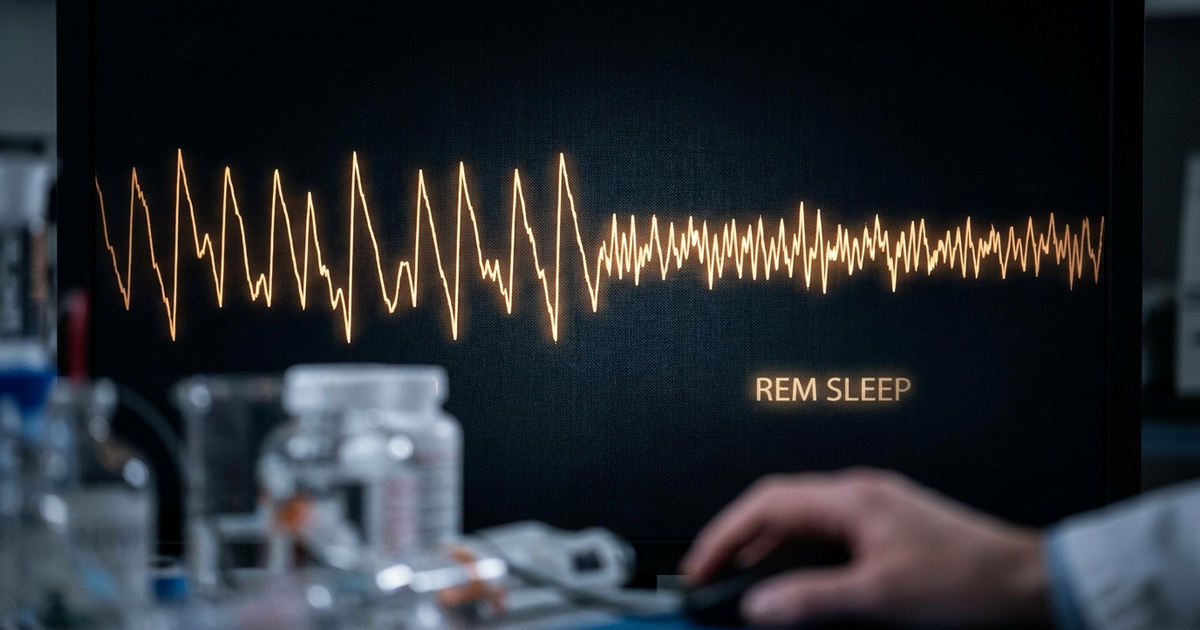
REM sleep gets its name from the literal eye movement, but the more important changes are happening inside the skull. Your brain's EEG pattern during REM looks similar to light wakefulness — fast, low-amplitude waves rather than the slow, deep waves of non-REM sleep. Meanwhile your body enters near-total muscle atonia: the brainstem actively suppresses signals to your limbs so you can't physically act out what you're dreaming. Most vivid dreaming happens here, though it's a myth that dreaming is exclusive to REM — it can occur in lighter non-REM stages too, just less often and less vividly. A full night cycles through REM roughly every 90 minutes, with each REM window getting longer as the night goes on.
Why REM Sleep Matters
Two jobs stand out. First, memory: a 2025 theory published in SLEEP Advances proposes that REM doesn't just store new memories, it links them to what you already know, while slow-wave (deep) sleep preserves the fine-grained original detail. Second, emotional processing. Neuroscientist Matthew Walker has described REM as a kind of overnight therapy session — stripping the sharp emotional edge off a memory while keeping the memory itself intact. As Walker puts it in a FoundMyFitness conversation on REM and cardiovascular health:
"It's not time that heals all wounds, but it's time during REM sleep that provides emotional convalescence."
Newer network-science work adds a third angle: REM appears to be "hyperassociative," loosely reshuffling memories in ways that support creative problem-solving — part of why a hard problem sometimes looks different after a night's sleep than it did the evening before.
How Much REM Do You Actually Need
For most healthy adults, 20-25% of total sleep time in REM is typical — roughly 90 minutes to two hours across a full night. REM declines with age; older adults commonly see less of it, which is one reason sleep feels lighter and more fragmented later in life. Unusually high REM is rarely something to chase — sleep researchers note it's more often a rebound effect after a period of sleep deprivation or disruption than a sign of exceptionally good sleep. The percentage matters less than consistency: getting a similar amount most nights beats one unusually REM-heavy night after a bad week.
What Your Sleep Tracker's REM Number Actually Means
If your Fitbit, Oura, or Apple Watch reports a REM percentage, treat it as an estimate, not a lab result. Consumer wearables infer sleep stage from movement and heart rate variability rather than the EEG a real sleep lab uses, and different devices frequently disagree with each other on the same night. That doesn't make the data useless — a consistent downward trend over weeks is worth noticing — but a single night's REM number bouncing around isn't something to lose sleep over, ironically. Track the trend, not the digit.
When Low REM Is a Warning Sign
Research through 2025 and 2026 has sharpened the clinical picture. A UCSF study published in January 2025 found that people who took longer to enter REM sleep had higher levels of amyloid and tau — the proteins associated with Alzheimer's disease — suggesting delayed REM onset could be an early warning marker. Separately, UC Irvine researchers reported in May 2025 that low oxygen during REM-stage sleep apnea appears to injure small blood vessels in memory-related brain regions, even in older adults with no cognitive impairment yet. On the treatment side, a July 2026 UT Austin trial tested a noninvasive ultrasound patch that helped 28 participants reach REM roughly 43 minutes faster and stay in it about 16 minutes longer; larger trials targeting PTSD, depression, and chronic insomnia are being planned. None of this means a rough night of REM is dangerous — but a persistent pattern of reduced or delayed REM, especially alongside loud snoring or gasping, is worth raising with a doctor.
How to Protect Your REM Sleep Naturally
The single biggest lever is sleep duration itself: REM is loaded toward the second half of the night, so cutting sleep short by even an hour disproportionately steals REM rather than deep sleep. Alcohol, cannabis, and several antidepressant classes (particularly SSRIs) are well-documented REM suppressants — which is part of why people on those substances often report vivid "rebound" dreaming when they stop. On the herbal side, most sleep herbs act on total sleep quality and onset rather than REM specifically, and none should be framed as a REM-boosting supplement — that claim isn't supported by the evidence. Valerian root and lemon balm both work on the GABA pathway to help you fall asleep and stay asleep longer, which indirectly protects REM by giving your brain the full night it needs to reach those later, REM-heavy cycles. Passionflower targets the racing-mind kind of insomnia that shortens total sleep time, and chamomile tea is a gentler option for the same goal. The honest framing: protect total sleep time and REM tends to take care of itself.
The Bottom Line
REM sleep is the stage where your brain consolidates memory, processes emotion, and reshuffles what you know into more useful form — and it's concentrated in the back half of the night, which is exactly the part most people cut when they stay up late or wake early. You don't need to chase a specific REM percentage on a wearable. You need consistent, uninterrupted sleep length, since that's what actually determines how much REM you get.
Transparency note: This article was researched and written by Chester Takau with AI assistance for research gathering and drafting. All recommendations reflect the author's own editorial judgment.
Comments
Post a Comment