Sleep Supplements and Alcohol: What's Actually Safe to Mix
Sleep Supplements and Alcohol: What's Actually Safe to Mix
By Chester Takau · August 2026
Does Alcohol Cancel Out Melatonin, or Just Change How It Works?
Neither, exactly — it's closer to sending your brain two contradictory signals at once. Alcohol suppresses the body's own natural melatonin production by roughly 19%, which is precisely why so many people wake up at 3am after a nightcap: the sedation wears off before your own melatonin has ramped back up to carry you through the rest of the night. Meanwhile, some sources describe melatonin and alcohol as not "directly" interacting in a harmful pharmacological sense, while clinicians still call the combination unsafe, because both substances depress the central nervous system independently. That distinction trips a lot of people up. The honest version: they don't chemically cancel each other out, but they do work against each other, and the practical result — grogginess, fragmented sleep, a foggy next morning — is the same either way.
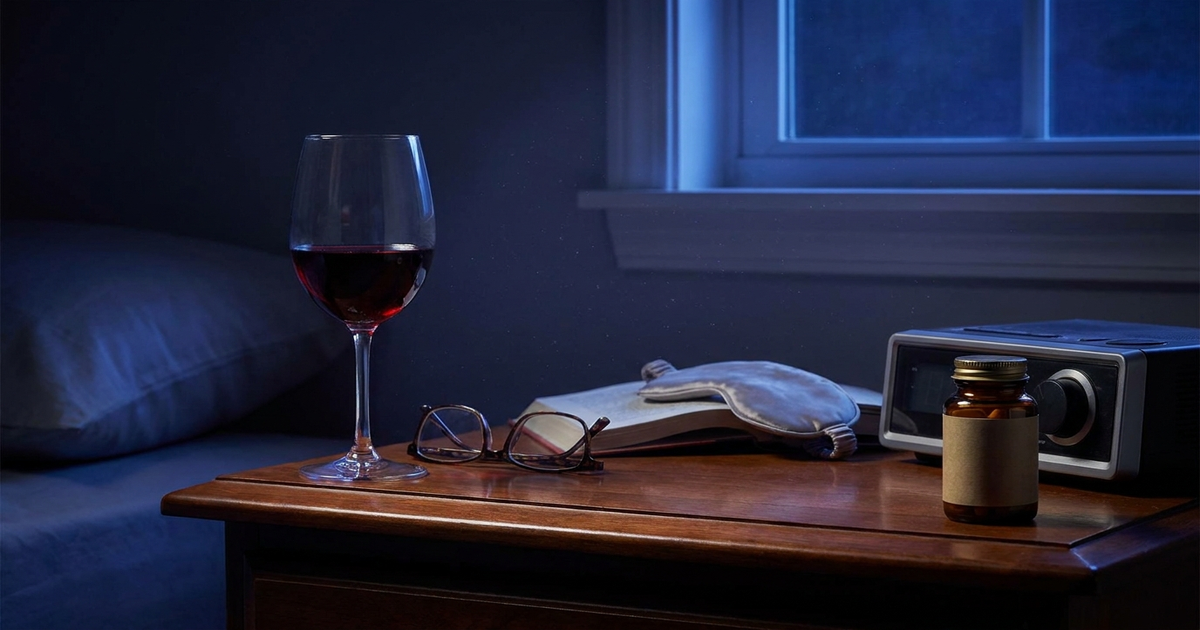
How Long Should You Wait Before Taking Melatonin After Drinking?
This is where sources genuinely disagree, and it's worth naming that instead of pretending there's one clean number. Recommended waiting windows range from 2–3 hours to 4–6 hours depending on the source, which is a wide enough gap that "just wait a bit" isn't useful advice. A simple way to think about it: the more you drank, the longer you need, because your liver is still processing alcohol and your own melatonin output is still suppressed during that window.
Rough wait-time guide by supplement
| Supplement | After 1–2 drinks | After 3+ drinks |
|---|---|---|
| Melatonin | Wait at least 3–4 hours | Skip it that night |
| Valerian / kava | Wait at least 3–4 hours | Skip it that night |
| Magnesium glycinate | Generally fine, or take next morning | Better taken next morning |
| Glycine / L-theanine | Generally fine at normal dose | Generally fine at normal dose |
Treat this as a starting point, not a precise cutoff — body weight, food intake, and how fast you drank all shift the real number. When in doubt, the safer move is skipping the melatonin for that night rather than guessing at a window.
What About Magnesium, L-Theanine, and Glycine — Are They Safer Than Melatonin?
Almost every article on this topic is melatonin-only, which leaves a real gap, because the non-hormonal options behave differently. Magnesium glycinate (200–400 mg), L-theanine (200 mg), and glycine are the most evidence-backed non-melatonin sleep aids, and reviewers note they carry no meaningful tolerance buildup, making them reasonable for nightly, indefinite use. None of them work by suppressing or mimicking a hormone your body already regulates, which is the specific mechanism that makes melatonin's interaction with alcohol worth flagging in the first place. That doesn't make them risk-free with alcohol in every case — anything sedating deserves some caution — but the conflict is structurally different and generally milder. For a wider look at how these compare against the more sedating herbal options, the valerian-vs-kava-vs-magnesium showdown is a useful side-by-side.
Magnesium After Drinking: Take It That Night, or the Next Morning?
This is the underexplored angle. Alcohol is a diuretic that flushes magnesium out of your system, so the useful question isn't just "is it safe to combine them" — it's "should I be replenishing, not sedating." Many people report it's generally safe and often beneficial to take magnesium glycinate after drinking, and some deliberately shift the dose to the next morning instead of the same night, treating it as recovery rather than a sleep aid in that moment. A 2026 study in the European Journal of Nutrition found magnesium didn't meaningfully improve sleep quality across a general population — it mainly helped people who were actually deficient, which lines up with the alcohol-depletion angle: if a drinking habit is quietly running your magnesium low, replenishing it may do more than any nighttime dose timed around a hangover.
Do Alcohol-Based Herbal Tinctures Matter If You Don't Drink?
Valerian and ashwagandha extracts are commonly sold as tinctures in an alcohol base, and this gets almost no dedicated coverage anywhere. For most adults taking a standard dropper dose, the alcohol content is small enough that it isn't a meaningful interaction concern on its own. It matters more for people avoiding alcohol entirely — for medical, religious, or recovery reasons — where even a trace amount in a tincture isn't acceptable, and an alcohol-free glycerite or capsule form is the better choice. It's a separate question from timing: even alcohol-free valerian is sedating enough that taking it too close to your wake time causes next-day grogginess, which is worth knowing regardless of which form you buy. If you're building a broader routine around this, it helps to start from herbal remedies built for modern insomnia rather than picking one herb in isolation.
Why Alcohol Feels Like It Helps You Fall Asleep, Then Wrecks the Rest of the Night
The "nightcap" reputation exists because alcohol genuinely does speed up sleep onset — that part isn't a myth. The problem shows up a few hours later: it slashes REM sleep and fragments the second half of the night as your body metabolizes it and rebound arousal kicks in, which is also when suppressed melatonin production leaves you without your normal backup signal. For anyone with obstructive sleep apnea, the stakes are higher still, since alcohol and melatonin both depress the central nervous system and can further reduce breathing and oxygen levels overnight. This is the core reason a growing number of sleep-focused sources now treat the after-dinner drink as counterproductive rather than helpful, whatever it feels like at 10pm.
Sharecare's Healthy Living series covers this exact timing question with a physician answering it directly — a useful watch if you want the clinical framing alongside the research summarized above.
What to Do Instead on a Drinking Night
If you know you're drinking, the simplest fix is separating the two habits rather than trying to time them precisely. Skip the melatonin or sedating herb that night, hydrate, and lean on non-sedating options instead — magnesium glycinate the next morning, or glycine and L-theanine at their normal daytime-safe doses. The "Sleepy Girl Mocktail" trend that spread across TikTok in 2025–2026 — magnesium, tart cherry juice, and soda — is essentially this same idea packaged as a ritual: something to sip that replaces the nightcap habit without stacking two depressants at bedtime.
Quick FAQ
Can mixing melatonin and alcohol hurt my liver?
Melatonin itself isn't considered liver-toxic at normal doses, and the bigger concern clinicians flag is the combined CNS-depressant effect, not direct liver damage. Regular heavy drinking is the liver risk on its own; melatonin doesn't meaningfully add to it at typical supplement doses.
I take a magnesium/glycine stack nightly — do I need to skip it on nights I drink wine?
Generally no, at normal doses. These aren't the pairing that raises safety flags in the research; melatonin and sedating herbs are the ones worth being deliberate about.
Alcohol helps me fall asleep but I wake at 3am — will a sleep supplement fix that?
Adding melatonin on top of alcohol usually doesn't fix 3am wake-ups, since the root cause is alcohol's effect on your sleep architecture and suppressed natural melatonin, not a shortage a pill can top up mid-metabolism. Addressing the drinking pattern itself, or timing your last drink much earlier in the evening, does more than stacking another supplement on top.
Will valerian or ashwagandha interact with alcohol the way melatonin does?
Valerian is the closer comparison, since it's a genuine sedative acting on GABA receptors — the same combined-depressant logic applies. Ashwagandha is milder and more of a stress-modulating adaptogen, so it's generally considered lower-risk, though caution around any sedating supplement and alcohol is still reasonable.
Sources: Sleep Foundation · Healthline · NIH/PMC, melatonin for alcohol-use-disorder patients · Healthline, Sleepy Girl Mocktail · FRA Railroader Sleep
Updated August 2026.
Transparency note: This article was researched and written by Chester Takau with AI assistance for research gathering and drafting. All recommendations reflect the author's own editorial judgment.