What Is Hops (Humulus Lupulus) for Sleep? The Plain-Language Explainer
What Is Hops (Humulus Lupulus) for Sleep? The Plain-Language Explainer
By Chester Takau · July 2026
What is hops, exactly?
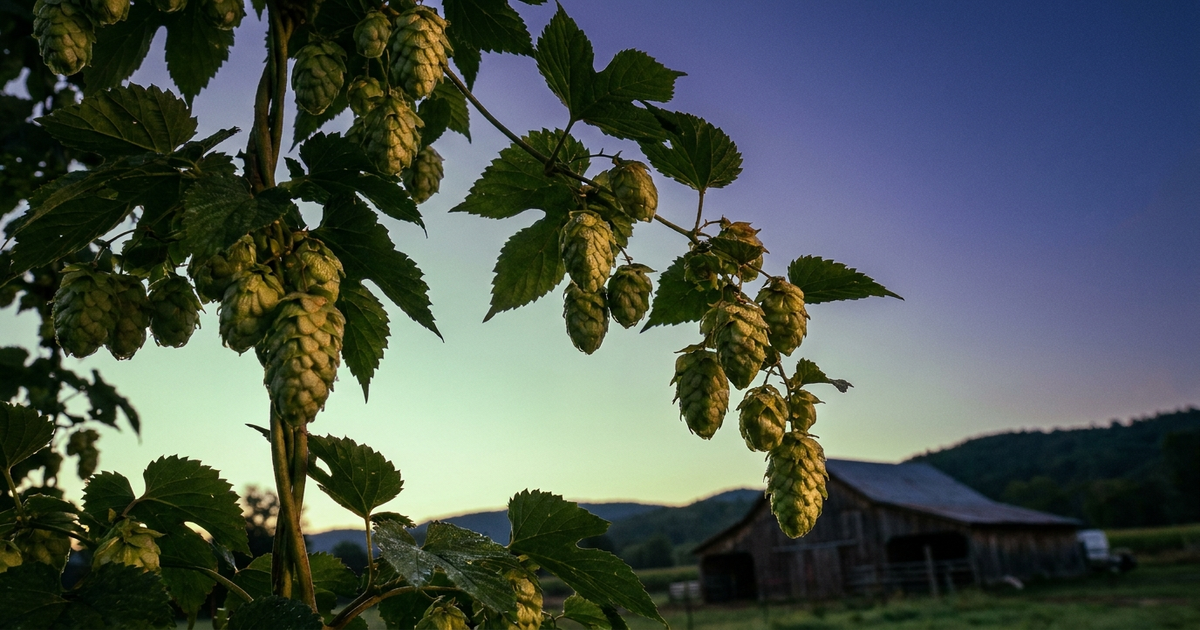
Humulus lupulus is a perennial climbing vine in the same family as cannabis (Cannabaceae). Its female flowers form small cone-shaped clusters that brewers dry and add to beer for bitterness and aroma. Those same cones are what herbalists use medicinally — not for flavor, but for the resins and oils inside them, which is where the sedative compounds live.
How does hops actually make you sleepy?
Two compounds do the work: xanthohumol and humulone. Both act as positive allosteric modulators of GABAA receptors — meaning they don't replace GABA, they make your existing GABA signal land harder. A 2021 study on the Saaz–Saphir hops mixture confirmed this mechanism directly. Then in November 2024, a study on Hongcheon-hop extract (grown in Korea) went further: at 100–200 mg/kg it produced dose-dependent increases in deep, slow-wave sleep, and in an insomnia model, a low dose of the extract actually outperformed the same dose of GABA itself. That's a striking result — a plant extract beating the neurotransmitter it's supposed to be boosting — and it's the strongest single piece of evidence that hops isn't just folklore. (PubMed 39522843)
So why doesn't beer put me to sleep the right way?
This is the question almost every hops article dodges. Beer contains far too little hops extract to deliver a meaningful dose — you'd need to drink an impractical volume to get anywhere near 100 mg of active compound. Worse, the alcohol actively works against sleep: it fragments sleep architecture, suppresses REM, and causes rebound wakefulness in the second half of the night. A 2021 controlled study isolated the two variables by using non-alcoholic beer, and sleep quality still improved after 29 days — which tells you the hops content was doing something, just not through the beer you'd actually want to drink for it. If you want the sedative effect, skip the pint and take hops as an extract, tincture, or tea instead.
Does hops work better alone, or combined with valerian?
Hops alone has real mechanism-level evidence, as above, but most of the human clinical trials test it paired with valerian, not solo. The fixed combination Ze 91019 is the most-studied formula: an older double-blind, placebo-controlled trial found it reduced sleep latency and wake-after-sleep-onset and increased slow-wave sleep, and a 2025 feasibility trial tracked the same combination with Fitbit sleep monitors over a 21-day treatment period. (PMC12134488) Honest framing: if you want the best-evidenced clinical result, valerian-plus-hops is where the data is strongest. If you specifically want to isolate what hops does on its own, the Hongcheon-hop and Saaz–Saphir studies above are your evidence, and they hold up.
How do I actually take it, and when does it kick in?
Onset is typically 30–60 minutes, so timing it before bed matters more than the exact form.
Hops by form
| Form | Typical dose | Notes |
|---|---|---|
| Dried herb tea | 0.5–1g dried cones, steeped 10 min | Mild, bitter taste; weakest dose form |
| Tincture | 1–2 mL (per label) | Faster absorption than tea |
| Standardized extract | 125–250 mg | Closest to clinical trial doses |
| Combination capsule (with valerian) | Per product label | Best-evidenced clinical form (Ze 91019) |
Does a hops pillow actually do anything?
Filling a pillow with dried hops is old European folk practice, and it's plausible in principle — hops release volatile oils as they warm, so there's a scent-exposure mechanism similar to lavender aromatherapy. But there's no clinical trial testing a hops pillow specifically, so this stays in folklore territory rather than evidence territory. It's low-risk to try, just don't expect it to match an oral extract dosed at trial-level amounts.
Will I get next-day grogginess, or build a tolerance?
At the doses used in the trials above, next-day grogginess is uncommon — hops is described consistently as mild rather than knockout-strong, which is part of why some users feel it's too weak alone. There's no strong evidence of tolerance or dependence building with typical intermittent or nightly use, unlike benzodiazepine sleep medications. If you notice morning fog, that's a signal to lower the dose rather than push through it.
Who should be careful with hops?
Hops contains 8-prenylnaringenin, one of the most potent phytoestrogens found in a plant. That's relevant if you're managing a hormone-sensitive condition, pregnant, breastfeeding, or on hormonal medication — talk to a doctor before regular use. Hops can also add to sedation from alcohol, sedative medications, or antidepressants, so don't stack it with those without medical guidance. It's generally regarded as safe at typical herbal doses for otherwise healthy adults, but "safe" and "no interactions" aren't the same claim.
For a broader look at hops as a traditional insomnia remedy, the video above covers the plant's history as a sedative outside of its brewing use.
Hops is frequently paired with valerian root, the herb it's most often combined with in clinical trials, and it shares the same GABA-pathway logic as lemon balm, though lemon balm works upstream on the enzyme that breaks GABA down rather than on the receptor itself. If you're comparing scent-based calming options, lavender essential oil is the closest analog to the hops-pillow folklore, with more aromatherapy trial data behind it.
Transparency note: This article was researched and written by Chester Takau with AI assistance for research gathering and drafting. All recommendations reflect the author's own editorial judgment.