What Is Skullcap Herb? American vs Chinese Skullcap, Explained
What Is Skullcap Herb? American vs Chinese Skullcap, Explained
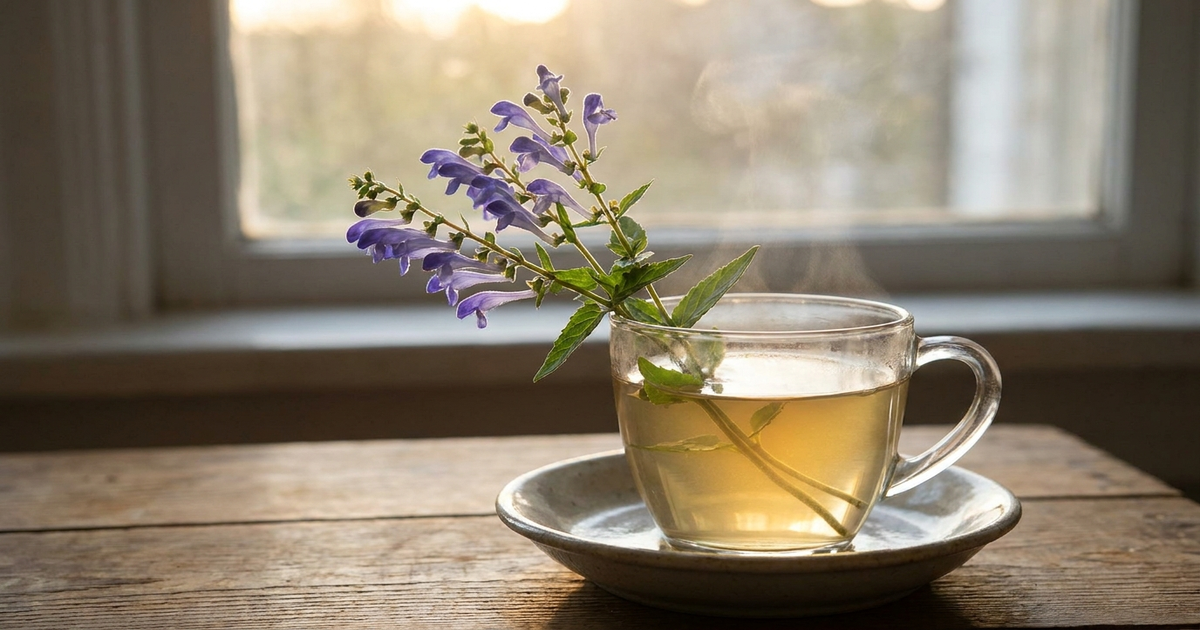
Skullcap is a mint-family herb in the Scutellaria genus. American skullcap (S. lateriflora, leaf and flower) is the one herbalists use as a calming “nervine” for stress and restless sleep. Chinese skullcap (S. baicalensis, root) is a different herb used for different purposes. Human evidence for sleep is early and limited, and the supplement market has a documented problem with substitution.
By Chester Takau · October 2026
Are American and Chinese skullcap the same herb?
No, and many articles and retail listings blur them. They share a genus, not a use.
American vs Chinese skullcap
| Feature | American skullcap | Chinese skullcap |
|---|---|---|
| Latin name | Scutellaria lateriflora | Scutellaria baicalensis |
| Part used | Leaf and flower | Root |
| Known for | Herbal nervine for stress, restless sleep | Root rich in baicalin |
| Sleep and stress trials | A 2025 insomnia crossover trial | A 2026 trial of a multi-ingredient tablet |
Does skullcap help with sleep or anxiety?
Possibly, but the proof is thin. A 2025 randomized crossover trial in 66 adults with insomnia used 400 mg a day of S. lateriflora extract against placebo for 56 days, with a 28-day washout, and reported possible gains in sleep-quality scores. In a separate placebo-controlled crossover study of 43 healthy adults, the main anxiety outcome did not differ significantly from placebo (p = 0.191).
The newest human trial, summarized by HerbClip in February 2026, tested a chewable tablet with 400 mg of Chinese skullcap plus hawthorn, magnesium and chromium. The authors reported better mood, less subjective anxiety and better cognition under stress. Because four ingredients were taken together, the result cannot be credited to skullcap alone. Drugs.com and an Acibadem Hospitals review both say the evidence is not consistent enough to call skullcap a reliable treatment for anxiety or sleep disorders.
Sky House Herb School & Apothecary covers American skullcap in this herb-of-the-month video. It is an herbalist's view, not clinical evidence.
Is skullcap bad for your liver?
Liver injury reports from the 1980s and 1990s were later traced mostly to germander (Teucrium species) sold as skullcap, not to true skullcap. A USDA study of 13 skullcap supplements bought online found only 5 contained a measurable amount of true skullcap; 4 contained American germander (Teucrium canadense) and 1 contained Chinese skullcap instead of American. A 2013 review called S. lateriflora possibly the most substituted species in Western herbal medicine. That data is from 2011, so it shows a risk, not today's market share.
To lower the odds: check that the label gives the Latin name, look for third-party testing, and be wary of cheap unbranded powders. Anyone with liver concerns should ask a doctor first.
Can you take skullcap with other sleep herbs or sedatives?
Forum users often stack it with passionflower, valerian and California poppy, but that is anecdote, not tested practice. Skullcap is traditionally described as calming, so combining it with sedatives or sleep medicine may add to drowsiness; check with a pharmacist. The same reasoning applies to other sedating botanicals, such as the one covered in our kava for sleep guide. Alcohol is a separate concern, covered in sleep supplements and alcohol. Skullcap is also usually left out of pregnancy advice and pre-surgery planning, so ask a clinician if either applies.
If you want a calming herb with a stronger cortisol-focused research story, see holy basil tulsi for sleep.
Tea, tincture or capsule? And how much?
There is no standard dose (Healthline says so directly). One herbalist finds tea more sedating about 30 minutes before bed; another says the tincture works fast but tastes awful. One WebMD reviewer reacted badly to an alcohol-based tincture. These are individual reports. If you try it, start with the label dose and talk to a pharmacist.
Sources
- HerbClip 778 (Feb 2026): Chinese skullcap combination trial
- NutraIngredients (May 2025): S. lateriflora insomnia trial
- Drugs.com monograph (reviewed Sept 2026)
- WebMD skullcap monograph: safety and interactions
- PubMed: USDA authentication study of skullcap adulteration
- Acibadem Hospitals review (July 2026)
- 7Song: The Skullcaps, a Scutellaria monograph
Updated October 2026.
Transparency note: This article was researched and written by Chester Takau with AI assistance for research gathering and drafting. All recommendations reflect the author's own editorial judgment.