What Is California Poppy for Sleep? A Non-Opium Herb, Explained
What Is California Poppy for Sleep? A Non-Opium Herb, Explained
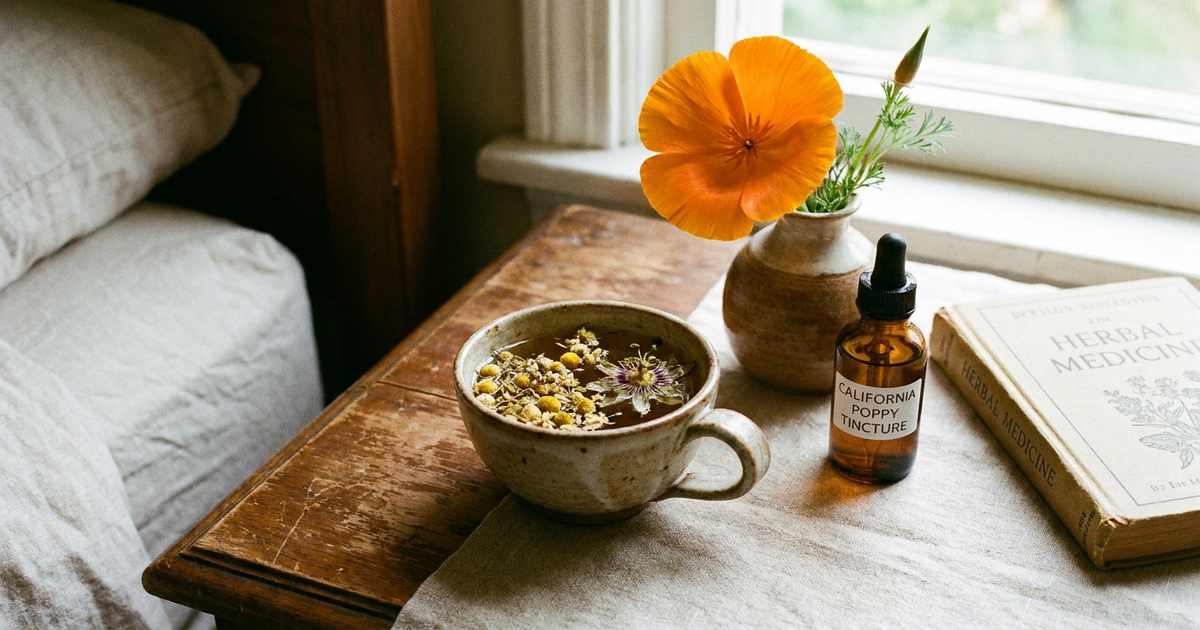
California poppy (Eschscholzia californica) is a flowering plant that herbalists use for relaxation and sleep. It is not the opium poppy. Opium poppy is a different species, Papaver somniferum. California poppy has its own alkaloids, and it is sold as tea, tincture, glycerite and capsules. Herbalists describe it as gentle. Mainstream sources say the evidence for it on its own is thin: Poison Control states there are "no useful studies conducted in humans" supporting the sleep claims.
By Chester Takau · November 2026
Is California poppy the same as opium poppy?
No. The two are different species, and California poppy is not the source of opium. A common question in forums is whether it contains opium or opiates, and even the people asking usually note that it "isn't supposed to have any opium." Where the picture gets less tidy is the mechanism. Herbal sites say it acts on GABA receptors, and a lab study on its alkaloids found that one of them, (S)-reticuline, modulates GABA-A receptors. The same authors suggested the sedative effect might also come from alkaloids being converted in the body into morphine-like compounds that act on opioid receptors. That is a hypothesis from lab work, not a demonstrated effect in people. I found no evidence-based answer on drug tests, only retailer claims, so if you are tested at work, ask your doctor or the testing provider.
What does the evidence say?
Most articles blur two different things. The table separates them. It is my own summary of the sources listed below, not a formal review.
| What was tested | Type of evidence | What it can and can't tell you |
|---|---|---|
| California poppy alone | Mostly lab and animal studies | Shows plausible mechanisms. Healthline says no evidence indicates it treats sleep disorders when taken on its own. |
| California poppy + valerian | A 2019 randomized placebo-controlled trial | Human data, but nobody can say how much of the effect came from the poppy. |
| California poppy alone, 104 adults with insomnia symptoms | A.Vogel Phase 3 trial, NCT06795776 | Completed, no results posted as of the record update in April 2026. |
The pending trial is the one to watch. According to its ClinicalTrials.gov record, it randomized 104 adults in Sofia, Bulgaria to two tablets a day or placebo for 4 weeks, with the Insomnia Severity Index as the main outcome. If results appear, this is the first sizeable test of the herb by itself.
What do herbalists say about it?
Practitioners are more positive. As herbalist Benjamin Zappin put it in an interview with Herbs With Rosalee:
"California poppy is really palpable as an anxiolytic, calmative, soporific. People take it and within a few minutes, they're like, "I feel more relaxed" or "I feel drowsy" or "I feel less anxious.""
This is a practitioner's observation, not trial evidence. The wording comes from the transcript Rosalee de la Forêt published on her own site, which does not name this video ID, so I have not matched it against the video itself. Some users also report that it works less well with frequent use, and others that it does nothing for them.
Safety and interactions
- Pregnancy and MAOIs: avoid, according to herbalist guidance from Medicalherbalist.org.
- Sedatives: Hermetica warns it may strengthen sedative drugs, and WebMD lists interactions. Check with a pharmacist before combining it with sleeping pills or benzodiazepines. Our guide on when to see a doctor for insomnia explains when to get professional advice.
- Surgery: WebMD advises stopping at least 2 weeks beforehand.
- Product variability: Poison Control notes alkaloid content varies between products and extracts can be 45–70% alcohol. Mild to moderate nausea is the only side effect it lists.
Dosing is not standardized. One herbalist guide gives 2–4 ml of tincture 30–60 minutes before bed, or tea from 2–4 g of dried herb, but it cites no studies and its site sells herbal products. Follow your product label and ask a clinician about your own case.
How does it compare with other sleep herbs?
California poppy sits in the same gentle, traditional-use group as other calming plants. The article on what skullcap herb is walks through a similar herb with its own naming confusion, and the chamomile and lavender tea blend guide covers a milder, familiar bedtime option.
FAQ
Is California poppy addictive?
The sources I checked report no addiction data. Users do mention reduced effect with frequent use, but that is anecdote.
Is it safe for kids?
Learning Herbs says children often prefer a glycerite because the herb tastes bitter. That is a taste tip, not a safety finding. Ask a paediatrician first.
Sources
- ClinicalTrials.gov: A.Vogel Eschscholzia trial NCT06795776
- PMC4609799: California poppy alkaloids and GABA-A receptors
- Poison Control: what to know about California poppy products
- WebMD: California poppy interactions
- Healthline: California poppy
- Medicalherbalist.org: California poppy guide (June 2026)
- Herbal Remedies Advice: Benefits of California Poppy with Benjamin Zappin
Updated November 2026. General information, not medical advice. The evidence table is the author's own summary. The EU herbal monograph could not be checked directly.
Transparency note: This article was researched and written by Chester Takau with AI assistance for research gathering and drafting. All recommendations reflect the author's own editorial judgment.