What Is Wild Lettuce for Sleep? Lactucarium, Explained

What Is Wild Lettuce for Sleep? Lactucarium, Explained

Wild lettuce (Lactuca virosa) is a bitter, prickly relative of salad lettuce. Its dried milky latex, called lactucarium or "lettuce opium," is sold as a sedative. It contains no opium. The name comes from the sap's look and its traditional use for pain and calm. No human trial has tested wild lettuce for sleep: ClinicalTrials.gov lists none, and the FDA has not approved wild lettuce supplements for insomnia or pain.
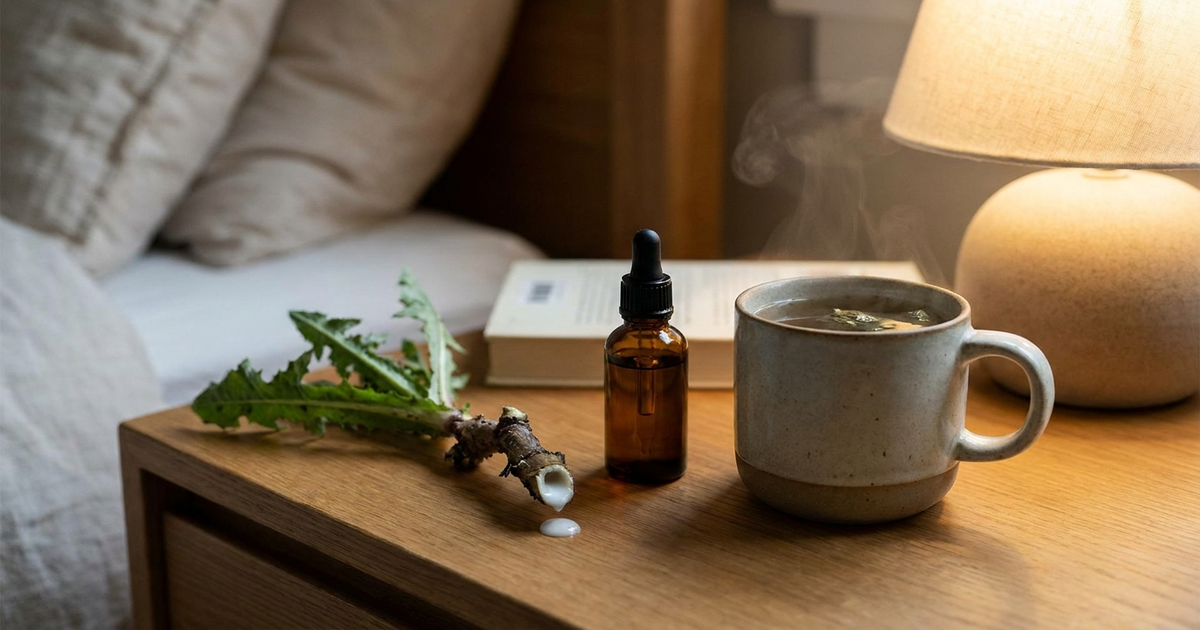
A wild lettuce stem with white latex beside a small tincture bottle and a cup of tea on a bedside table, representing what wild lettuce is for sleep

By Chester Takau · November 2026

Chester Takau is an independent researcher covering natural sleep remedies. Content is educational and not a substitute for advice from a doctor or pharmacist. More at the about page.

What is lactucarium, and is it really "lettuce opium"?

Lactucarium is the white latex that leaks from the stem when the plant is cut, then dried. The "opium" nickname refers to its appearance and its old use as a milder stand-in for opium. Reference monographs such as Drugs.com's "Lettuce Opium" entry file it under that name, but the plant is not related to the opium poppy. For a different herb with a similar name problem, see our explainer on what California poppy is for sleep.

A promotional NaturalNews piece from 9 November 2026 calls wild lettuce unscheduled. I could not confirm that on any FDA page, so treat it as an example of the hype, not a legal answer.

What does the evidence for sleep actually show?

Most pages blur three very different kinds of evidence. This table is my own summary of the sources listed below, not a formal review.

Rung What was tested What it can and can't tell you
1. MiceLactuca latex and lactucin-rich extracts, including a 2020 Molecules studySleep lengthened via GABA-related pathways. Amerisleep notes the often-cited result came with pentobarbital-induced sleep, meaning the extract amplified a sedative drug rather than causing sleep alone.
2. People, garden lettuceA 2025 Nutrients trial: 1,000 mg/day of Lactuca sativa extract for 4 weeks, 100 adults with poor sleep (91 analyzed)Total sleep time and sleep efficiency improved on actigraphy and polysomnography. Insomnia Severity Index scores did not differ from placebo. The supplier funded it. It is not wild lettuce.
3. People, wild lettuceL. virosa for sleepNo trials listed on ClinicalTrials.gov, according to a November 2026 Planet Today article. The rest is anecdote.

Sleep experts are cautious. Rebecca Robbins of Brigham and Women's told VICE she knows of no high-quality human studies showing lettuce has sedative effects. Dr. Michael Breus told VERIFY that the mouse studies don't show it helps humans sleep.

Wild lettuce, garden lettuce and lettuce water: what's the difference?

The species matters for reading a label, and for reading the research.

Name Species Where it shows up
Wild lettuce, lettuce opiumLactuca virosaSupplements sold in the US, per Clinician.com. No human sleep trial.
Garden lettuceLactuca sativaThe 2025 trial (cultivar 'Heukharang'), salad, and the TikTok "lettuce water" idea.

Few sources also separate L. serriola, another wild species, from the other two, and I found no source that tests it for sleep. Lettuce water and lettuce tea are the garden-lettuce side of the confusion, and the VERIFY fact-check found no evidence they induce sleep in humans.

Wild lettuce is also unrelated to the 2026 FDA and CDC lettuce warnings, which concerned a cyclospora outbreak traced to iceberg lettuce.

What do herbalists say?

Herbalists value it more for pain and tension than for general insomnia. Clinical herbalist Sajah Popham explains his use of it on Herbs With Rosalee:

"I like wild lettuce for pain…specifically for musculoskeletal pain in the form of tension, constriction, spasm"

The quote comes from the episode show notes, ellipsis included, and it is about pain, not sleep. I have no verified sleep-specific quote. One reading is that wild lettuce may suit people kept awake by pain or muscle tension more than people with general insomnia, but that is a hypothesis, not a finding. One Nightcone blogger who took 500–1,000 mg for seven nights reported possible help falling asleep and no effect on dreams. That is a single anecdote.

Safety, dosing and what to check on a label

  • No standard dose. Sources disagree: 60–90 tincture drops in some places, 300–600 mg of extract in others, and neither is a clinical standard.
  • Poisoning reports. Drugs.com cites a 2009 report of eight poisoning cases after people ate large amounts of raw wild lettuce, and historical reports of stupor, depressed breathing, coma and death at high doses.
  • Variable products. The yourNEWS piece of 10 November 2026 says strength and makeup vary and that clinical research is insufficient for insomnia, anxiety or chronic pain. Look for the Latin name Lactuca virosa on the label rather than just "lettuce extract," and be wary of any standardized lactucin claim, since I found no standard for it.
  • Who should ask first. Reference sources list sedatives, alcohol, benzodiazepines and opioids, narrow-angle glaucoma, pregnancy and daisy-family allergy, and advise stopping 2 weeks before surgery. Because the FDA has not approved wild lettuce supplements, a label can't be taken at face value.
  • Foraging. Look-alikes exist and DIY tincture videos rarely mention the poisoning risk.

Herbs with more human data are easier to judge. Our piece on California poppy for sleep covers one, and the guide to skullcap shows how much species and sourcing can change a product. Forum posts suggest people combine wild lettuce with valerian, kava or melatonin, but I found no research on those combinations.

FAQ
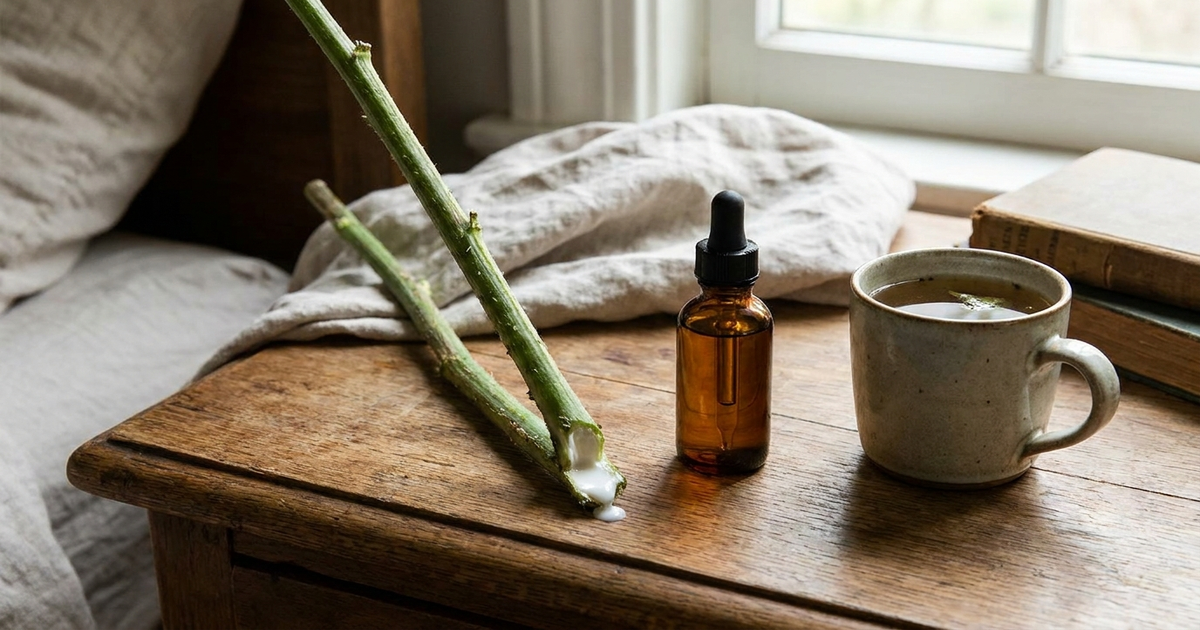
A wild lettuce stem with white latex beside a small tincture bottle and a cup of tea on a bedside table

Will wild lettuce get you high?

I found no reliable evidence of a high. The sources describe sedation, and at large doses poisoning.

Does it work better for pain or for sleep?

Traditional use and retail reviews lean toward pain, and some reviewers say chronic pain more than acute injury. Neither has trial support for wild lettuce itself.

Is it safe with sleeping pills or alcohol?

Reference sources list sedative interactions. Ask a pharmacist before combining it with anything sedating.

Sources

Updated November 2026. General information, not medical advice. The evidence ladder is the author's own summary, and I could not retrieve the full text of every source, including the video transcript.

Transparency note: This article was researched and written by Chester Takau with AI assistance for research gathering and drafting. All recommendations reflect the author's own editorial judgment.
Does Reishi Mushroom Help You Sleep at Night? What the 2026 Trial Does and Doesn't Show

Does Reishi Mushroom Help You Sleep at Night? What the 2026 Trial Does and Doesn't Show

Possibly, but the proof is thinner than the headlines suggest. A June 2026 conference abstract reported that 980 mg of reishi extract cut insomnia scores more than 5 mg of melatonin over 8 weeks. That result has not appeared in a peer-reviewed journal, had no placebo group, and did not disclose funding. Older evidence is mostly animal studies and small human trials with self-reported sleep. Many users describe reishi as calming rather than sedating, and it did not stop night waking for one reviewer who tested it for 30 days.

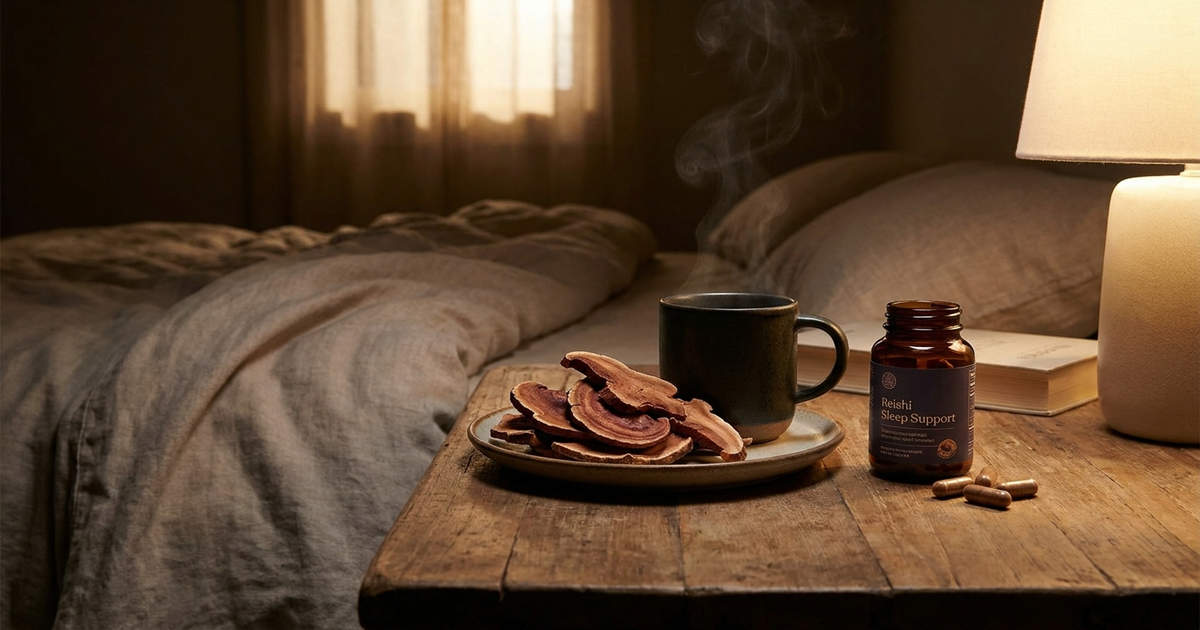
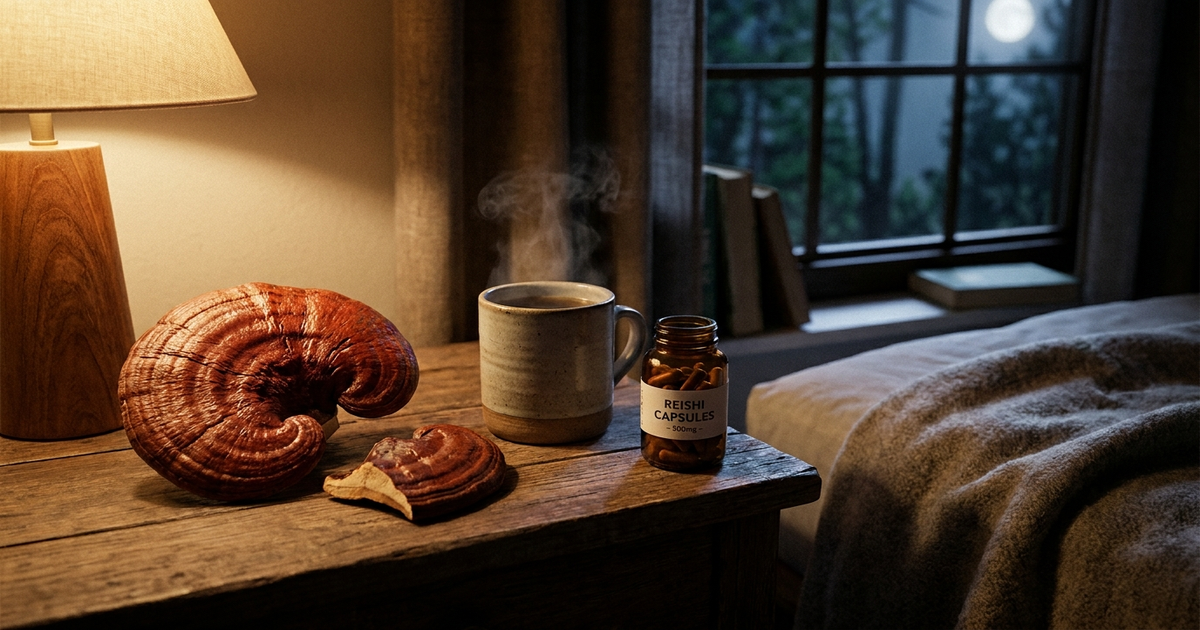
A sliced red-brown reishi mushroom beside a steaming mug and a small capsule bottle on a bedside table at night, representing whether reishi mushroom helps you sleep at night

By Chester Takau · November 2026

Chester Takau is an independent researcher covering natural sleep remedies. Content is educational and not a substitute for advice from a doctor or pharmacist. More at the about page.

Is reishi better than melatonin?

A sliced red-brown reishi mushroom beside a steaming mug and a small capsule bottle on a bedside table at night

That is how brands present the SLEEP 2026 result. According to Patient Care's report, Ching Xie, MD, of Brooklyn Unity Medical Care randomized 218 adults with chronic insomnia. One group took 980 mg of Ganoderma lucidum extract (standardized to 6% triterpenes) nightly, the other 5 mg of melatonin. After 8 weeks, Insomnia Severity Index (ISI) scores had fallen 8.7 points on reishi and 5.6 on melatonin, a gap of 3.1 points (95% CI −4.2 to −2.0). Of the 218 participants, 209 finished, and no serious adverse events were reported.

Three caveats matter. It is still a late-breaking abstract, and I found no journal paper. There was no placebo arm, so you cannot separate the extract's effect from expectation. Funding was not disclosed. The ISI runs 0–28, and a change of about 6 points is often cited as clinically meaningful, so both groups improved by a noticeable amount and the 3.1-point gap is the new part. Treat it as a reason to run a proper trial, not as a verdict.

What does the rest of the evidence show?

Answers differ depending on which kind of study you look at. The table is my own summary of the sources listed below, not a formal review.

Evidence What it was What it can and can't tell you
Animal studiesMostly rodents, e.g. longer total sleep timeShows a possible effect. Doesn't show the same happens in people.
Small human trialsShort, self-reported sleep outcomes2026 evidence summaries still find no large, well-powered RCT of reishi alone.
SLEEP 2026 abstract218 adults, reishi vs melatonin, 8 weeksLargest reishi-alone sleep signal, but unpublished, no placebo, funding undisclosed.
Brain and Behavior, Jan 202612-week placebo-controlled RCT, 50 stressed adults, five-mushroom blend at 500 mg/dayLower anxiety and cortisol, with sleep as an outcome. Can't be credited to reishi alone.
NCT07294482100 people, reishi tincture, 1 ml before bedEstimated completion Sept 2026, still listed as recruiting, no results, single-arm with no placebo.

The blend trial and the ongoing tincture study are the two worth checking back on. Results from either, or a journal version of the SLEEP 2026 abstract, would change this picture.

Does reishi make you sleepy, or just calm?

Reviewers lean toward calm. A Tom's Guide writer who tested reishi tea found it calming but not sleepy-making. In a separate 30-day test aimed at 3 a.m. waking, reishi did not fix it. Other users go the opposite way: a WebMD review mentions needing a 2–3 hour nap mid-day. These are individual reports, and the expert quoted by Tom's Guide notes that a placebo response is real but does not prove the mushroom caused the change.

A practical read: reishi may suit someone whose sleep problem is stress and a racing mind more than someone who needs to be knocked out. Brands also push the “melatonin-free” angle, as Charlotte's Web did with its reishi, chamomile and magnesium gummies in September 2025. That is positioning, not evidence of better results. For another gentle, traditional-use herb with the same thin-human-evidence story, see this explainer on California poppy for sleep.

The video above is from FreshCap Mushrooms, a brand that sells reishi, and I could not verify its upload date or check its transcript, so I'm not quoting it. It is included as the clearest explainer of the mushroom-for-sleep claim.

How to read a reishi label

The SLEEP 2026 dose was 980 mg of extract at 6% triterpenes. Teas, gummies and hot chocolates often contain far less or don't state an amount, so they are not comparable to that trial. When you check a product, look for:

  • Fruiting body or mycelium: the label should say which part of the mushroom is used.
  • Extract vs plain powder: an extract ratio (for example 1:4 for the tincture in NCT07294482) tells you how concentrated it is.
  • Triterpene percentage: the trial used 6%. No percentage means you can't compare.
  • Single or blend: blends with lion's mane or cordyceps can't be judged as reishi.

Sellers also claim reishi has the “highest natural concentration of adenosine” of any edible mushroom. Even a FreshCap-linked article admits no human study has tested reishi's adenosine, so I would not rely on it.

Who should check with a clinician first?

  • People on anticoagulants, blood pressure medication or immunosuppressants, where commentators raise possible interactions.
  • Anyone with liver concerns, or who is pregnant or having surgery.
  • Anyone whose poor sleep comes with loud snoring, gasping or extreme daytime sleepiness. These can point to sleep apnea or narcolepsy, and a supplement could mask them. See our guide on when to see a doctor for insomnia.

FAQ

When should I take reishi for sleep?

No standard timing exists. The ongoing tincture trial uses 1 ml about 30 minutes before bed, and the SLEEP 2026 abstract used a nightly dose. Some users describe benefits only after weeks or months of nightly use, which is anecdote.

Does the form matter?

Probably, because dose and extraction differ. The trial result applies to a standardized extract, not to every tea or gummy.

Can I combine it with lion's mane?

I found no solid evidence either way. The Tom's Guide 30-day test used reishi with lion's mane and reported no fix for 3 a.m. waking.

Sources

Updated November 2026. General information, not medical advice. The evidence table is the author's own summary. Reddit threads could not be accessed during research.

Transparency note: This article was researched and written by Chester Takau with AI assistance for research gathering and drafting. All recommendations reflect the author's own editorial judgment.
What Is California Poppy for Sleep? A Non-Opium Herb, Explained

What Is California Poppy for Sleep? A Non-Opium Herb, Explained

California poppy (Eschscholzia californica) is a flowering plant that herbalists use for relaxation and sleep. It is not the opium poppy. Opium poppy is a different species, Papaver somniferum. California poppy has its own alkaloids, and it is sold as tea, tincture, glycerite and capsules. Herbalists describe it as gentle. Mainstream sources say the evidence for it on its own is thin: Poison Control states there are "no useful studies conducted in humans" supporting the sleep claims.

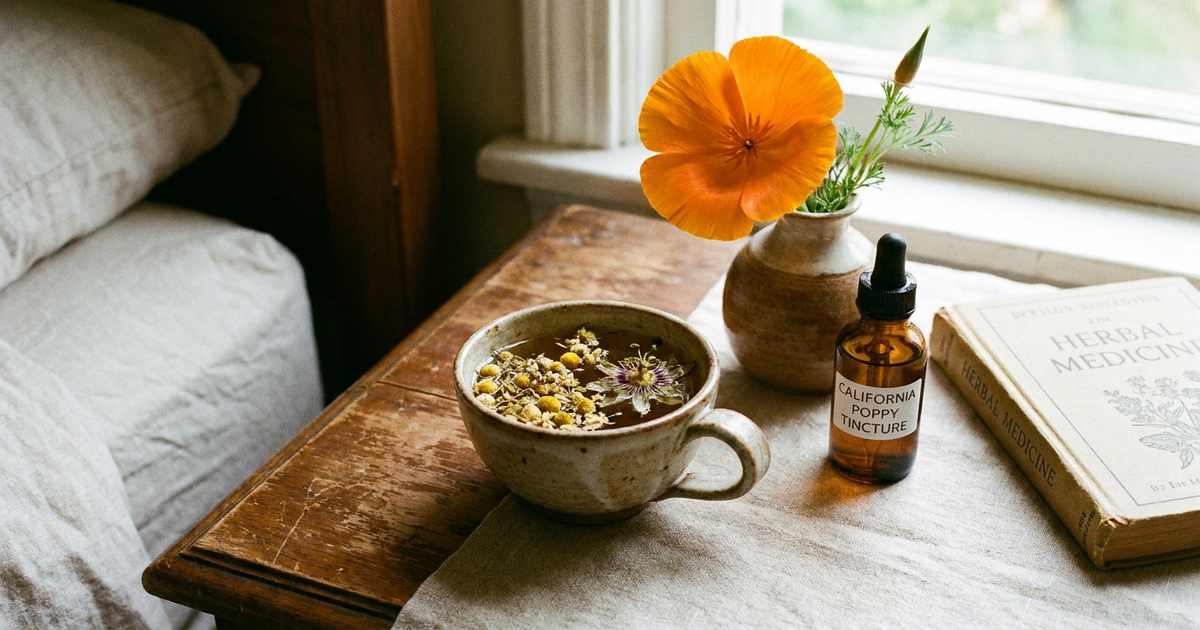
An orange California poppy flower beside a dried-herb tea cup and a small tincture bottle on a bedside table, representing what California poppy is for sleep

By Chester Takau · November 2026

Chester Takau is an independent researcher covering natural sleep remedies. Content is educational and not a substitute for advice from a doctor or pharmacist. More at the about page.

Is California poppy the same as opium poppy?

No. The two are different species, and California poppy is not the source of opium. A common question in forums is whether it contains opium or opiates, and even the people asking usually note that it "isn't supposed to have any opium." Where the picture gets less tidy is the mechanism. Herbal sites say it acts on GABA receptors, and a lab study on its alkaloids found that one of them, (S)-reticuline, modulates GABA-A receptors. The same authors suggested the sedative effect might also come from alkaloids being converted in the body into morphine-like compounds that act on opioid receptors. That is a hypothesis from lab work, not a demonstrated effect in people. I found no evidence-based answer on drug tests, only retailer claims, so if you are tested at work, ask your doctor or the testing provider.

What does the evidence say?

Most articles blur two different things. The table separates them. It is my own summary of the sources listed below, not a formal review.

What was tested Type of evidence What it can and can't tell you
California poppy aloneMostly lab and animal studiesShows plausible mechanisms. Healthline says no evidence indicates it treats sleep disorders when taken on its own.
California poppy + valerianA 2019 randomized placebo-controlled trialHuman data, but nobody can say how much of the effect came from the poppy.
California poppy alone, 104 adults with insomnia symptomsA.Vogel Phase 3 trial, NCT06795776Completed, no results posted as of the record update in April 2026.

The pending trial is the one to watch. According to its ClinicalTrials.gov record, it randomized 104 adults in Sofia, Bulgaria to two tablets a day or placebo for 4 weeks, with the Insomnia Severity Index as the main outcome. If results appear, this is the first sizeable test of the herb by itself.

What do herbalists say about it?

Practitioners are more positive. As herbalist Benjamin Zappin put it in an interview with Herbs With Rosalee:

"California poppy is really palpable as an anxiolytic, calmative, soporific. People take it and within a few minutes, they're like, "I feel more relaxed" or "I feel drowsy" or "I feel less anxious.""

This is a practitioner's observation, not trial evidence. The wording comes from the transcript Rosalee de la Forêt published on her own site, which does not name this video ID, so I have not matched it against the video itself. Some users also report that it works less well with frequent use, and others that it does nothing for them.

Safety and interactions

  • Pregnancy and MAOIs: avoid, according to herbalist guidance from Medicalherbalist.org.
  • Sedatives: Hermetica warns it may strengthen sedative drugs, and WebMD lists interactions. Check with a pharmacist before combining it with sleeping pills or benzodiazepines. Our guide on when to see a doctor for insomnia explains when to get professional advice.
  • Surgery: WebMD advises stopping at least 2 weeks beforehand.
  • Product variability: Poison Control notes alkaloid content varies between products and extracts can be 45–70% alcohol. Mild to moderate nausea is the only side effect it lists.

Dosing is not standardized. One herbalist guide gives 2–4 ml of tincture 30–60 minutes before bed, or tea from 2–4 g of dried herb, but it cites no studies and its site sells herbal products. Follow your product label and ask a clinician about your own case.

How does it compare with other sleep herbs?

California poppy sits in the same gentle, traditional-use group as other calming plants. The article on what skullcap herb is walks through a similar herb with its own naming confusion, and the chamomile and lavender tea blend guide covers a milder, familiar bedtime option.

FAQ

Is California poppy addictive?

The sources I checked report no addiction data. Users do mention reduced effect with frequent use, but that is anecdote.

Is it safe for kids?

Learning Herbs says children often prefer a glycerite because the herb tastes bitter. That is a taste tip, not a safety finding. Ask a paediatrician first.

Sources

An orange California poppy flower beside a dried-herb tea cup and a small tincture bottle on a bedside table

Updated November 2026. General information, not medical advice. The evidence table is the author's own summary. The EU herbal monograph could not be checked directly.

Transparency note: This article was researched and written by Chester Takau with AI assistance for research gathering and drafting. All recommendations reflect the author's own editorial judgment.