Blue Light and Melatonin Production: What the 2026 Evidence Shows

Blue Light and Melatonin Production: What the 2026 Evidence Shows

Bright light at night can lower melatonin, and blue-heavy light does it most, but your phone is a smaller offender than the research headlines suggest. A 2024 review of 73 studies found screen light delayed sleep onset by only about 2.7 minutes on average. The bigger variables are how bright the light is, how long you are exposed, and what you are doing on the screen. Cool-white ceiling bulbs may matter more than the phone in your hand.
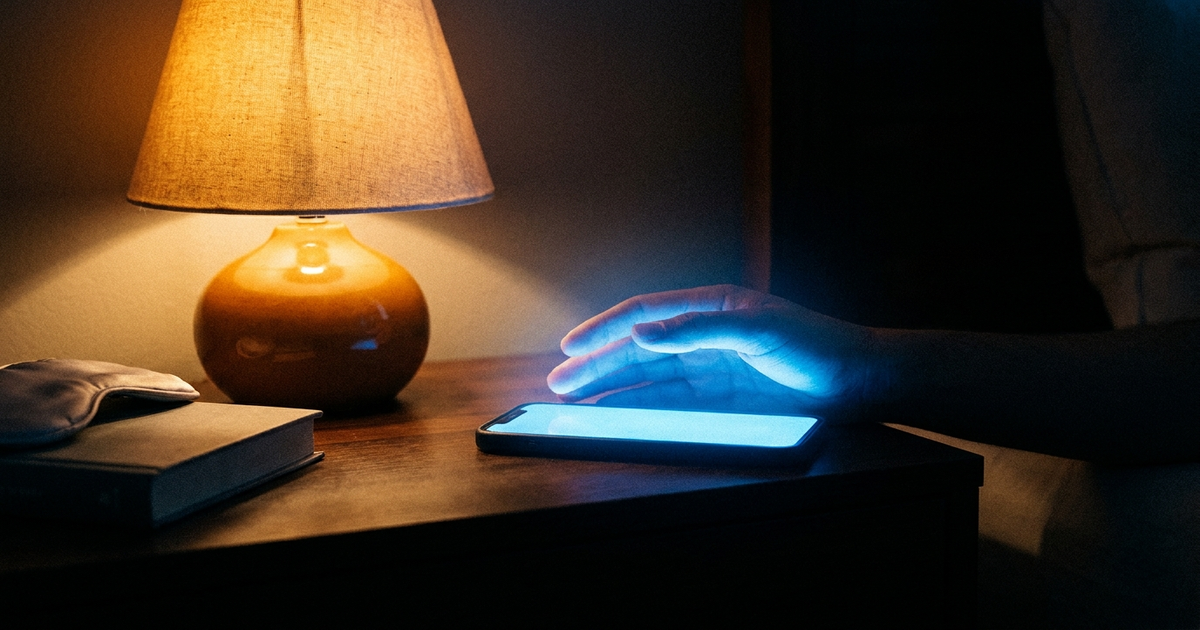
A phone glowing blue on a dark nightstand beside a warm amber bedside lamp, representing blue light and melatonin production

By Chester Takau · November 2026

Chester Takau is an independent researcher covering natural sleep remedies. Content is educational and not a substitute for advice from a doctor or pharmacist. More at the about page.

How light switches melatonin off

A phone glowing blue on a dark nightstand beside a warm amber bedside lamp

Special light-sensing cells in your eyes respond most strongly to short, blue-ish wavelengths. When they signal "daytime" to the brain's body clock, it holds back melatonin, the hormone that rises in the evening and tells your body night has started. That is why the effect is real in the lab. The open question is how much of it happens at the light levels people actually live in.

Which light sources suppress the most melatonin?

A January 2026 Scientific Reports study modelled 52 household lamps and estimated how much each would suppress melatonin. These are computer estimates from the light's spectrum, not measured hormone levels, so read them as a ranking rather than a promise.

Light source Estimated melatonin suppression
Cool-white LED or CFL bulbabout 12%
Warm LEDabout 3.6%
Warm CFLabout 2.6%
Incandescentabout 1.5%
Tunable bulb set to 5700 Kabout 10%
Tunable bulb set to 2100 Kabout 0.1%

The pattern is simple: the same bulb dropped from about 10% to about 0.1% just by shifting from 5700 K to 2100 K. For an evening room, that points to bulbs of 2700 K or lower, or a tunable bulb dimmed warm. The study also modelled lenses. Medium-brown blue-filter lenses cut estimated suppression by about 99%, while clear "clinical" coated lenses gave no significant reduction.

Why dose matters more than colour

The Conversation's summary of the 2024 Sleep Medicine Reviews paper notes that a screen delivers roughly 80 to 100 lux at your eyes, while meaningful melatonin disruption needs about 1,000 to 2,000 lux. Across 11 experiments in that review (73 studies and 113,370 participants overall), bright screen light delayed sleep onset by about 2.7 minutes, and exciting content cost about 3.5 minutes. Put those side by side and what you watch matters slightly more than the glow itself.

The 2026 lamp numbers fit that picture. A cool-white ceiling fixture lights the whole room at far higher intensity than a phone held at arm's length, which is why brightness and bulb colour deserve attention before screen filters do.

What the studies actually found

Study Result Limit
Toddler crossover, Pediatrics Open Science (Oct 2026), 32 children aged 15–24 months15 minutes of tablet viewing with the blue filter off raised melatonin about as much as a picture book (P = .79). Actigraphy sleep did not differ.One short exposure; says nothing about longer or habitual use
Meta-analysis, Frontiers in Neurology (Nov 2025), 3 trials, 49 adultsAmber blue-blocking glasses vs clear lenses: sleep onset −4.86 min (p = 0.54), total sleep +8.75 min (p = 0.70), neither significantVery small pool; authors call glasses a possible adjunct, not a standalone therapy
Review, Sleep Medicine Reviews (2024), 73 studiesBright screen light delayed sleep onset by about 2.7 minutesAverages hide individual differences
BYU, Sleep Health (2021), iPhone Night ShiftNight Shift made no difference to sleep outcomes; people who skipped the phone slept better than both phone groupsTests one phone feature, not bulbs
Student literature review, Rowan-Virtua (May 2026)Concluded blue light before bed harms sleep in teens and young adults, with melatonin delayed by up to about 2 hoursA research-day poster, so weaker evidence

The toddler study is the freshest piece. Lead author Neele Hermesch said the team "would not assume that blue light delayed the release of melatonin." Melanopic light, the measure of how strongly light drives those eye cells, was higher with the tablet (13.98 vs 5.11 lux), yet salivary melatonin rose about the same on both nights (book 5.08 to 14.8 pg/mL; tablet 5.52 to 18.2 pg/mL). Older work did find 87.6% suppression in preschoolers, but under bright light. The difference comes down to intensity.

Do blue-light glasses help?

The honest answer depends on the lens. In the lamp modelling, brown or amber lenses cut estimated suppression sharply and clear coated lenses did not. In actual people, the 2025 meta-analysis found no significant gain on objective sleep measures. Dr. Brian Chen, a Cleveland Clinic sleep specialist, said in September 2026 that glasses may not be enough because "the light is going to keep you awake," and advised stopping electronics about two hours before bed. Fans of the glasses point to lab work where goggles restored melatonin to about 85% of its dim-light level, versus about 25% under bright light. Both can be true: a strong amber lens works on light, but sleep also depends on arousal.

Content, not just colour

Andrew Huberman has softened his earlier hard line on evening blue light. In a clip on Peter Attia's channel, he describes the shift:

As Peter Attia MD's channel has it, Huberman says early in the clip:

"I used to be kind of a hardliner no blue light in the evening guy" … "what I'm doing on my phone matters more than how bright my phone is"

Quote note: the wording comes from an auto-generated caption transcript with no speaker labels, and the lines are attributed to Huberman from the page context. It sits at roughly 0:35 to 0:45. Check it against the video before quoting it elsewhere.

Forum readers say the same thing in plainer words. One MacRumors commenter wrote that "endless scrolling feeds are causing sleep issues, not the color of your screen." That is anecdote, not data, but it matches the 3.5-minute content effect in the review.

A practical evening light routine

  • Swap bulbs first. Use 2700 K or lower in rooms you use after dark, or a tunable bulb dimmed toward 2100 K.
  • Dim everything, not just the phone. Brightness matters for any colour of light.
  • Keep the last hour calm. Stimulating feeds and videos seem to cost more than the glow.
  • Get bright light in the day. Huberman notes blue light is useful for the daytime side of the mechanism; strong daytime light supports a clearer night-time melatonin rise.
  • Treat herbs as habits, not shields. A warm drink and a dim room can fit the same wind-down, but I found no evidence that any herb counters the effect of light on melatonin. If you take sleep supplements, read our guide to FDA regulation of sleep supplements before choosing one, and check with a doctor or pharmacist before combining supplements with other products or medicines.

General guidance, not medical advice. Talk to a doctor or pharmacist if you have persistent sleep problems or take medicines.

Frequently asked questions

Does Night Shift or night mode help me sleep?

The BYU study found no difference in sleep outcomes from iPhone Night Shift. People who skipped the phone before bed slept better than both phone groups.

Is it the blue light or what I'm looking at?

Both play a part, but the 2024 review put exciting content at about 3.5 minutes of delay and screen light at about 2.7 minutes. Neither is large on average.

Is red or amber light better than blue at night?

Warmer, dimmer light suppresses less melatonin in the lamp modelling. Brightness still counts: one video short argues even low-blue bulbs hurt if they are too bright, and the research here is consistent with that.

Will a tablet before bed affect my toddler's melatonin?

In the October 2026 crossover study, 15 minutes of tablet viewing did not suppress melatonin compared with a picture book. It was a short, single exposure in 32 children, so it does not cover long or daily screen time.

Should I trust "blue light" product pages?

Be careful. Many are written by glasses or bulb sellers, and figures such as "58% melatonin increase" are poorly sourced.

Sources

Updated November 2026. New studies appear often; few were published between May and November 2026.

Transparency note: This article was researched and written by Chester Takau with AI assistance for research gathering and drafting. All recommendations reflect the author's own editorial judgment.
FDA Regulation of Sleep Supplements: What the FDA Checks and What It Doesn't

FDA Regulation of Sleep Supplements: What the FDA Checks and What It Doesn't

In the US, the FDA does not approve sleep supplements before they are sold. Companies are responsible for making sure a product is safe and labeled truthfully, and the FDA mostly steps in afterward, by inspecting facilities, issuing warnings and requesting recalls. So "unregulated" is wrong, but "FDA-checked" is wrong too. The agency sets manufacturing rules and can act on problem products, yet nobody verifies the dose in your melatonin gummy before it reaches the shelf.

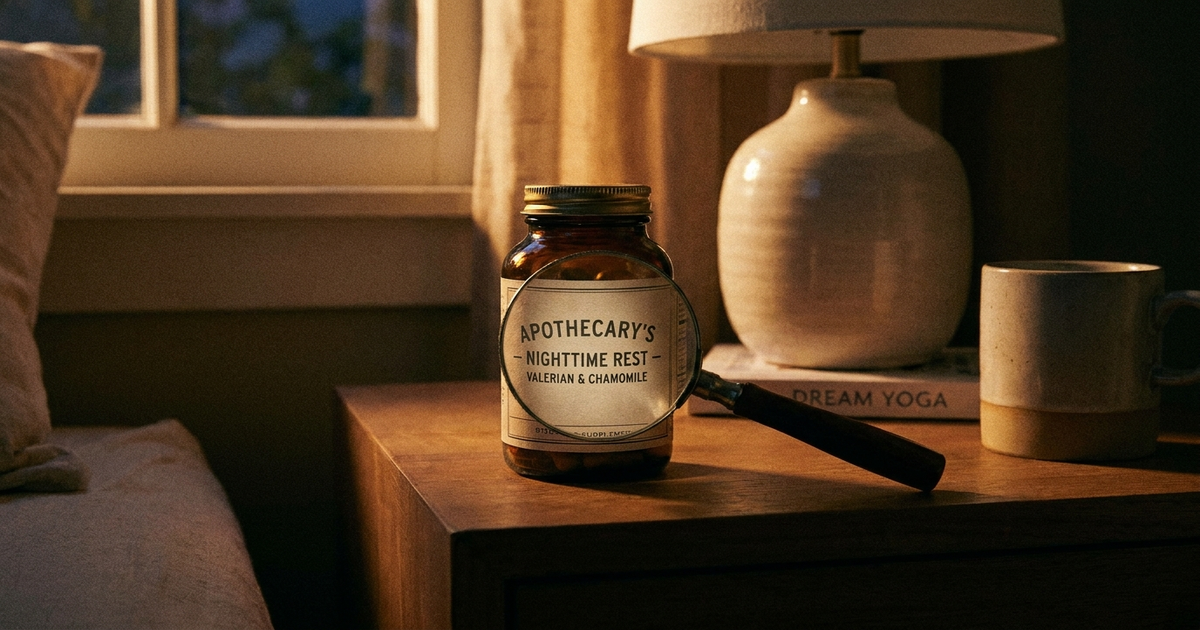
A supplement bottle on a bedside table beside a magnifying glass over its label, representing FDA regulation of sleep supplements

By Chester Takau · November 2026

Chester Takau is an independent researcher covering natural sleep remedies. Content is educational and not a substitute for advice from a doctor or pharmacist. More at the about page.

What the FDA does before and after a supplement is sold

Dietary supplements, including melatonin, valerian, magnesium and ashwagandha, fall under the 1994 Dietary Supplement Health and Education Act (DSHEA), not the drug rules. The practical difference is the order of events.

Question Sleep drug (prescription) Sleep supplement
FDA approval before sale?Yes, safety and effectiveness reviewedNo
Who proves it is safe?The manufacturer, to the FDAThe manufacturer, on its own; the FDA must show a product is unsafe to remove it
Manufacturing rules?YesYes, supplement-specific good manufacturing practice (GMP) rules
ClaimsMust be proven for the approved use"Supports sleep" style claims allowed; may not claim to treat insomnia; label carries an "not evaluated by the FDA" disclaimer
New ingredientsFull approvalIngredients not sold before 1994 need a New Dietary Ingredient (NDI) notification, and the FDA reviews the safety evidence
Problem found laterFDA can withdraw approvalWarning letters, public notices, recalls, seizures

The 2026 enforcement record shows the pattern. In late October the FDA renewed a warning about "Green Lumber" after more samples tested positive for undeclared tadalafil, and listed a recall of a male-enhancement supplement for undeclared sildenafil, tadalafil and dapoxetine. Those are not sleep products, but each was a case of a product already on sale being pulled back.

"Unregulated" versus "that's a myth"

Both camps are partly right. Doctors quoted by Sermo describe melatonin as not fully regulated, and Live Science quotes experts saying it is "being promoted like there's absolutely no risk." The industry group CRN calls "unregulated" the biggest myth and points to GMP rules, facility registration and FDA oversight of ingredients. The accurate middle: there are rules, but they work after the fact, and nobody tests your specific bottle for you.

Does the label dose match what is inside?

Often not, and melatonin is the best-documented case. A 2023 JAMA study found 22 of 25 melatonin gummies mislabeled, with 1.3 to 13.1 mg per serving; one contained CBD and no melatonin. An earlier study of 31 products, summarized by StatPearls, found actual content from 83% below to 478% above the labeled dose. A Mayo Clinic video makes the related point about assuming safety from the shelf:

As Mayo Clinic's Dr. Naima Covassin puts it near the end of the segment:

"Because something is marketed as 'natural' or a product is sold over the counter doesn't mean it's harmless."

Quote note: the wording was checked against Mayo Clinic's published script as syndicated by the News Tribune, not the video captions. The segment dates from 2022.

What label terms actually mean

Label wording What it tells you What it does not tell you
"FDA approved"Should not appear on a supplement; it is a red flagSupplements are not approved. Prescription melatonin-receptor drugs, such as those StatPearls lists, are a different product class.
"FDA registered facility"The plant is on the FDA's facility listRegistration is not an inspection or an endorsement of the product
"Made in a GMP facility"The maker says it follows manufacturing and testing rulesThe FDA may not have inspected it recently; mislabeling studies still found problems
USP, NSF or ConsumerLab sealA private group tested or audited the productNot a government check; each program has its own scope, so read what the seal covers
"Natural"Nothing standardized for safetyWhether it interacts with medicines or alcohol

That last point matters for herbs. Whether a sedating herb is "natural" tells you nothing about mixing it with a drink, which is why it is worth asking a doctor or pharmacist about any combination with alcohol.

Can a "natural" sleep aid hide a drug?

It can happen, and the FDA's public list is how many cases surface. The "Sleep, Skin, Bodybuilding and Other Product Notifications" page was still being updated in June 2026 (latest entry PRE-FORMANCE BLACK, 6/24/2026), but its newest sleep entries are older: bio LIT in February 2025 and Agebox iKids in September 2025. A quiet list does not prove clean shelves. It records what has been found, and detection is mostly reactive, so products sold online by unregistered sellers are the highest-risk group. You can search the list before buying something unfamiliar.

The 2026 rule changes, in plain English

  • Self-affirmed GRAS would end (proposed 2026-08-11). Today a company can decide on its own that an ingredient is "generally recognized as safe" without telling the FDA. The proposed rule (91 FR 51834, Docket FDA-2025-N-3262) would make notifying the FDA mandatory. Comments are due 2026-12-09. It is aimed at food ingredients, so its direct effect on herbs sold as supplements is limited, but supplement makers also use GRAS ingredients such as excipients and flavors.
  • Final NDI guidance (issued 2026-10-19). For a new ingredient, companies are told to document the manufacturing process, specifications, analytical methods and impurities or contaminants. That affects new compounds more than long-sold herbs like valerian.
  • Dietary Supplement Listing Act of 2026 (H.R. 8370, introduced 2026-04-20). It would create the first mandatory FDA listing of each product, with its label, ingredients and claims. It is a bill, not law.
  • Leadership change. Commissioner Marty Makary resigned on 2026-05-12, and Kyle Diamantas, the deputy commissioner for food, became acting commissioner. Supplements sit on the food side. I found no reporting yet on what this means for enforcement, so treat any prediction as speculation.
  • Scope of "dietary substance" (public meeting 2026-03-27). The FDA asked for input on what counts as a dietary ingredient under DSHEA. Industry welcomes a broader definition; critics worry about weaker oversight.

The direction is mixed: stricter on notification, with parts of the industry also pushing for deregulation. None of it changes today's rule that your bottle is not checked before it is sold.

Why melatonin is a supplement here and a medicine elsewhere

The UK, EU and Australia classify melatonin as a medicine, available by prescription, while in the US it is sold as a supplement. That is a legal classification difference, not a finding that the US version is safer or more effective. It also explains the dose pattern people notice: many US pills are 3 to 10 mg, though studies suggest roughly 0.3 mg can work. In a related finding, an AHA 2025 conference abstract of about 130,800 adults with insomnia linked long-term melatonin use to higher heart-failure risk (5% versus 3%). It shows association only, was not peer-reviewed at the time, and critics note that people with insomnia already carry more cardiac risk. It is a reason to ask a doctor about long-term use, not proof of harm.

Herbal and mineral sleep aids are covered by the same framework. Interaction questions are a good example of why this matters: see our 5-HTP and SSRI interaction warning, and check with a doctor or pharmacist before combining any supplement with a medicine. For melatonin specifically, our article on melatonin tolerance and dependence covers long-term use.

Frequently asked questions

Are any sleep supplements FDA approved?

No. Supplements are not approved. Prescription sleep drugs, including some that act on melatonin receptors, are approved, but they are a separate category.

Is it safe to give kids melatonin gummies because they are "just a supplement"?

Being a supplement says nothing about safety. Pediatricians have objected to an untested product spreading among parents, and CDC data show pediatric melatonin ingestions rising. Ask your child's doctor first, and keep gummies stored like medicine.

A supplement bottle on a bedside table beside a magnifying glass over its label, dim evening light

Where do I report a bad reaction?

To the FDA through MedWatch or the Safety Reporting Portal, and also to the company. Keep the bottle, lot number and a note of the dose and timing. Tell your doctor or pharmacist as well.

How can I lower the risk of buying a mislabeled product?

Choose products with an independent testing seal and check what the seal covers, avoid unregistered online sellers, and search the FDA's tainted-product list for the brand. None of these is a guarantee.

Sources

Updated November 2026. Rules and proposals change; check the FDA and Federal Register pages for current status.

Transparency note: This article was researched and written by Chester Takau with AI assistance for research gathering and drafting. All recommendations reflect the author's own editorial judgment.
Does GABA Cross the Blood Brain Barrier? What the Evidence Shows

Does GABA Cross the Blood Brain Barrier? What the Evidence Shows

Probably only in small amounts, and nobody has shown it in people. Early studies mostly found that GABA does not cross the blood-brain barrier. Later animal work found tiny amounts getting through, and the most-cited review (Boonstra et al., 2015) calls the data "often contradictory." As of late 2026 I found no human brain-imaging study showing that oral GABA raises GABA inside the brain. A trial that could answer it directly (NCT06464172) has no posted results.

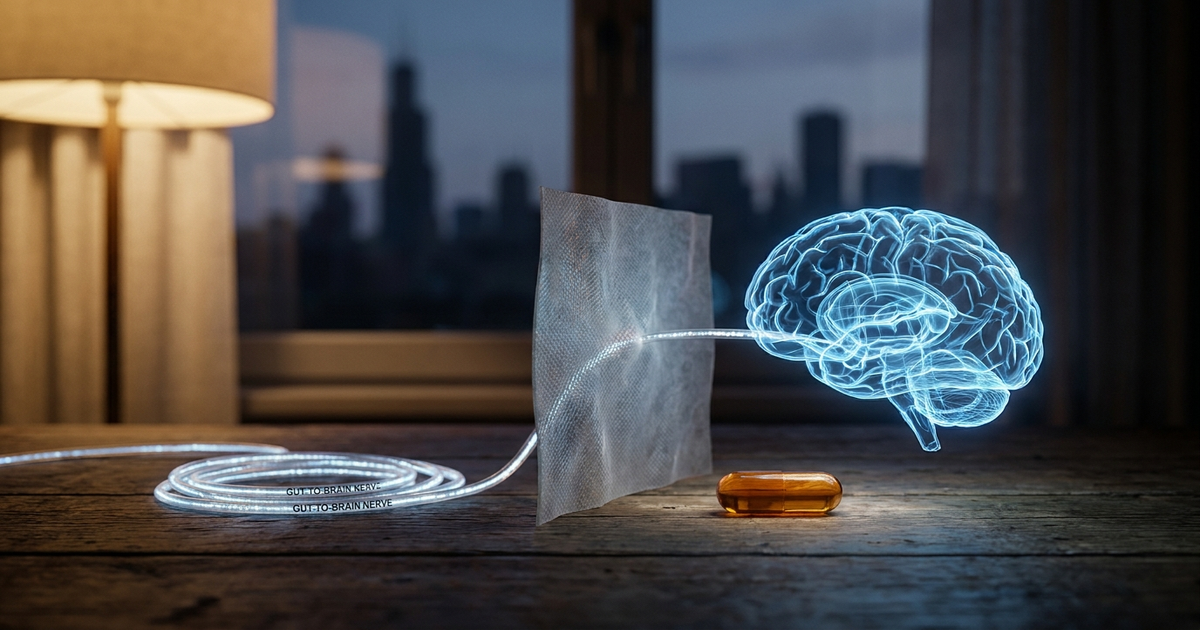
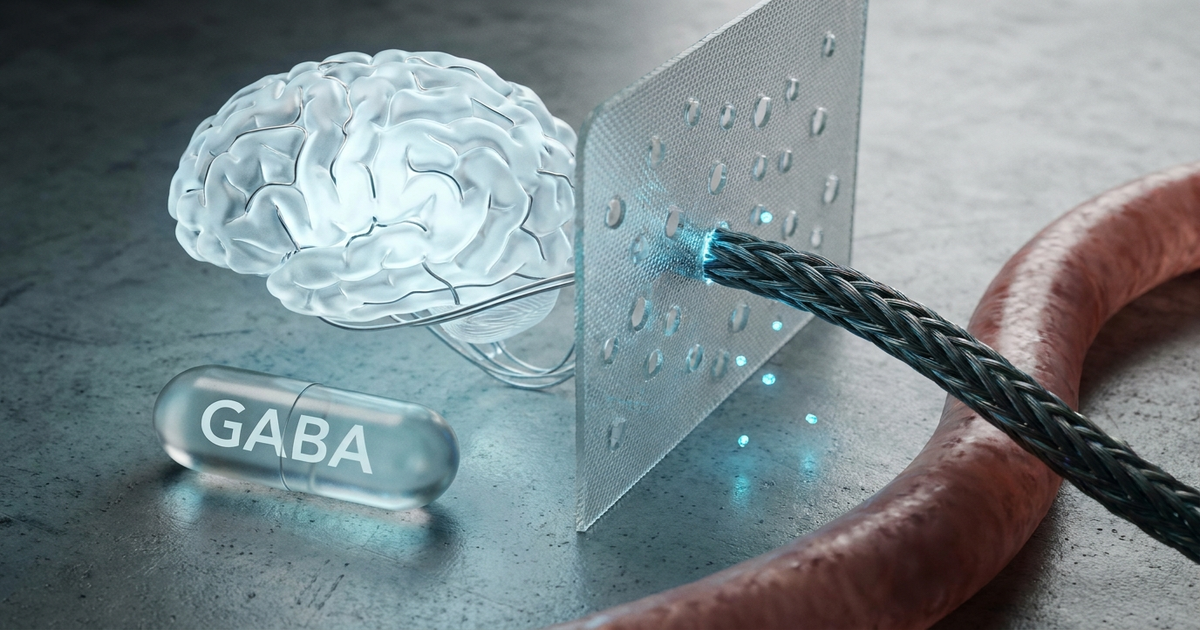
A supplement capsule beside a stylised brain outline with a membrane barrier and a gut-to-brain nerve line, representing whether GABA crosses the blood brain barrier

By Chester Takau · November 2026

Chester Takau is an independent researcher covering natural sleep remedies. Content is educational and not a substitute for advice from a doctor or pharmacist. More at the about page.

What happens to a GABA capsule after you swallow it

Most pages stop at "it doesn't cross." The fuller picture has steps, and the evidence is stronger for some than others.

  • Absorption. GABA does reach the blood. In a pharmacokinetic study of 12 volunteers (Li et al., 2015), blood levels peaked 0.5 to 1 hour after dosing and the half-life was about 5 hours.
  • The barrier. GABA carries a charge, which is why skeptics call it "too polar" to pass easily. Boonstra and colleagues note that several studies still reported small amounts crossing, with widely varying methods.
  • Removal. McGill's Office for Science and Society points out that GABA that does get in may simply be "removed from it very rapidly," which would make it hard to measure and hard to benefit from.

Wikipedia captures the shift: the old view was that supplemental GABA does not cross, but rat research in the 2010s left the question "unclear." A 2025 mouse study reportedly found higher prefrontal GABA after oral dosing, but according to secondary summaries its authors stopped short of claiming direct passage through the barrier.

If it doesn't cross, why do some people feel sleepy?

Three explanations are in play, and they are not exclusive.

The gut route. A 2026 Nutrients review on GABA as a functional nutrient lists vagus-nerve activation and gut GLP-1 release as proposed mechanisms, but those rest on animal and cell models. There is human data that oral GABA does something in the gut: a May 2026 crossover pilot in 20 people with diarrhea-type IBS (18 finished) found a clinical response in 66.7% on GABA versus 33.3% on placebo, with a significant drop in IL-1β (p = 0.02). That is small, and it says nothing about sleep. It does show an effect without needing brain entry. The vagus nerve connects gut and brain, which is why this route keeps coming up.

Other ingredients and expectation. In the Reddit threads I read, some commenters credit the magnesium taken alongside GABA for the calm. Placebo response is also real in small sleep trials.

A little gets in. If small amounts do cross, even a modest effect is possible. This is the part nobody has settled.

One claim to treat carefully: the supplement brand Troscriptions argues that feeling GABA's effects means you have a leaky barrier. That comes from a company selling an alternative product, and I found no neutral source supporting it.

Thomas DeLauer covers this in the "Do GABA Supplements Work?" chapter, starting around 02:34. After describing animal injection studies, he says:

"we have not seen this replicated in humans" … "so we cannot say yes or no Gaba supplements get into the brain"

Quote note: the words come from an auto-caption transcript on a third-party mirror, and I could not check them against the audio. The video is from 2024, and DeLauer is a nutrition creator, not a researcher.

GABA versus compounds that do cross

People often ask why phenibut, gabapentin, baclofen and picamilon work on the brain when GABA supposedly doesn't (the question McGill's explainer addresses). They are different molecules, built or modified in ways that change how they interact with the barrier.

Compound Reaches the brain? Note
Oral GABAUnresolvedContradictory animal data; no human brain-imaging proof
PhenibutCited as crossingCarries risks and regulatory issues; not a sleep supplement to casually try
Gabapentin, baclofenCited as crossingPrescription drugs; OTC GABA is not a substitute, so ask your prescriber before stopping one
PicamilonCited as crossingGABA bonded to niacin; regulatory status varies, so check locally

Herbs are a separate case. Plants such as skullcap are discussed for calming effects through other pathways; our explainer on what skullcap herb is and how American and Chinese skullcap differ covers what is and is not known there.

How good is the sleep evidence?

Modest. A 2020 systematic review (Hepsomali et al.) found "limited evidence for stress and very limited evidence for sleep." The positive sleep trials are small, mostly Japanese and often industry-funded; the key Yamatsu 2016 trial had about 10 subjects. Whether a product is fermented (such as PharmaGABA) or synthetic is rarely compared head to head, and I found no independent evidence that liposomal or "nano" GABA crosses better.

What could settle it

Université de Sherbrooke registered NCT06464172, with 30 participants. It measures serum GABA and TMS short-interval cortical inhibition 40 minutes after oral GABA versus placebo, which is a direct test of whether oral GABA changes brain activity. The estimated primary completion date was May 2026, but the registry was last updated February 2025 and listed it as "not yet recruiting." I found no results.

Frequently asked questions

Does feeling GABA's effects mean my barrier is leaky?

No neutral source supports that. The claim comes from brand content. Gut and nerve effects, other ingredients and expectation are simpler explanations.

A capsule beside a stylised brain outline with a membrane barrier and a gut-to-brain nerve line, dim evening light

Is GABA safe to take?

A 2026 rat study found no reproductive or developmental toxicity from repeated oral GABA. That is useful context but not human long-term safety data, and it does not address the barrier. People ask about tolerance and rebound anxiety, and I found no good data on either. If you take sedating medication, ask a pharmacist first.

Does liposomal GABA cross better?

I found no independent evidence either way.

Sources

Updated November 2026. Reddit threads were read through a snapshot mirror, so post dates are estimates.

Transparency note: This article was researched and written by Chester Takau with AI assistance for research gathering and drafting. All recommendations reflect the author's own editorial judgment.